Watercolour is one of the most widely loved painting techniques in the world. With its unique transparency, soft colour transitions and remarkable versatility, it allows artists to create effects that are difficult to achieve with other media.
However, anyone who decides to begin painting with watercolours or upgrade their existing materials is usually faced with dozens of choices. Watercolours in tubes or pans? Student or Artist Quality? How many colours do I need? Which shades are truly essential?
The right choice does not depend solely on budget. Your level of experience, the type of painting that interests you, the portability of your materials and the quality of the final result all play an important role.
In this comprehensive guide, you will learn everything you need to know to choose the right watercolour paints, avoid unnecessary purchases and put together a complete set that will serve you well for many years.
What Are Watercolour Paints?
Watercolours are paints made with water-soluble pigments that are activated with water. Unlike acrylic or oil paints, watercolour painting is based on transparency, successive layers and the interaction between the colour and the white surface of the paper.
This means that choosing the right materials is particularly important, as the paper, brushes and quality of the watercolour paints directly affect the final result.
For a better painting experience, it is worth combining your watercolours with quality brushes and specialist watercolour paper. A well-chosen set of materials makes the process more enjoyable and helps even a beginner gain better control of the technique.
Why Does the Right Choice Matter?
Not all watercolour paints perform in the same way.
Your choice affects:
• The brightness of the colours
• Transparency
• Ease of mixing
• How the paint behaves on the paper
• The long-term durability of the artwork
• How easily the technique can be learned
Many beginners believe they are struggling because they “do not have talent”. In reality, they are often using unsuitable or very low-quality materials that make even basic techniques more difficult to master.
Choosing quality materials does not necessarily mean spending a large amount of money. It means buying the materials you genuinely need.
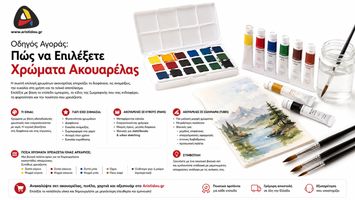
Watercolour Pans
Watercolour pans are the most popular choice for artists who paint outside the studio or want a portable set.
Advantages:
• Easy to transport
• Quickly activated with water
• Require very little storage space
• Have a long lifespan
• Ideal for sketchbooks and urban sketching
For frequent travellers or anyone who enjoys painting outdoors, a compact pan set is particularly practical.
Watercolour Tubes
Watercolour tubes contain paint in a softer, moist form and make it easier to use larger quantities when required.
They are especially useful for:
• Large areas
• Professional applications
• Strong colour gradients
• Creating a personalised palette
• Artworks that require larger amounts of paint
Many artists combine both formats. They use tubes to fill their palettes and pans for portable painting.
How Many Colours Does a Beginner Really Need?
One of the most common mistakes is buying an oversized set containing dozens of colours.
In practice, most artworks can be created using a carefully selected essential palette.
For a beginner, the following colours are generally sufficient:
• One warm and one cool yellow
• One warm and one cool red
• One warm and one cool blue
• One ochre
• One earthy brown
• One neutral grey or black, if desired
With these essential colours, you can create hundreds of different shades through colour mixing.
For those just starting out, a quality basic watercolour set is a practical choice. It can then be expanded gradually with individual colours according to your evolving needs.