Acrylic paints are among the most versatile painting materials. They dry quickly, blend easily and can be used on canvas, paper, wood, cardboard, plaster and a wide range of craft surfaces. However, the extensive choice of product ranges, colours and packaging sizes can make selecting the right paints difficult, especially for beginners.
To choose the right acrylic paints, you need to consider your level of experience, the technique you want to use, your painting surface and the result you wish to achieve.
Acrylic Paints for Beginners or Professional Artists?
Acrylic paint ranges are generally divided into two main categories: student-grade and artist-grade paints.
Student-grade acrylics are suitable for beginners, school pupils, students and creators who paint for practice or as a hobby. They offer good coverage, easy blending and a more affordable price. They are an excellent choice for experimentation, large-scale projects and frequent use.
Artist-grade acrylics usually contain a higher concentration of pigment and produce cleaner, richer and more durable colours. They are suitable for professional artwork, paintings intended for sale or exhibition and projects that require excellent lightfastness.
Expert tip: Beginners do not necessarily need dozens of different colours. A quality set of essential colours is enough to learn colour mixing properly and create an extensive palette.
Which Acrylic Paint Consistency Should You Choose?
The consistency of acrylic paint affects how it is applied and the final result.
Medium-body acrylics are easy to use, spread evenly and are ideal for general painting. Heavy-body acrylics offer excellent coverage, retain brush or painting-knife marks and are suitable for artworks with strong texture and dimension.
Fluid acrylics are used for thin layers, pouring, detailed painting and techniques that require a smooth, consistent flow. To change the consistency of the paint without reducing its durability, it is better to use an acrylic medium rather than adding excessive amounts of water.
Which Colours Do You Need to Get Started?
A practical essential palette may include:
• Titanium white
• Black
• Primary yellow
• A warm and a cool red
• A warm and a cool blue
• Yellow ochre
• Burnt sienna
With these colours, you can mix greens, oranges, purples, earth tones and a wide range of colour gradations. White is generally used more quickly than other colours, so choosing a larger tube or container is often more economical.
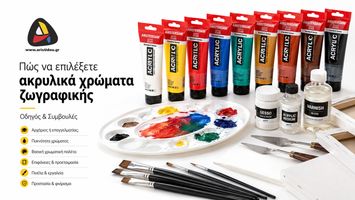
At Aristidou.gr, you can discover acrylic paints in individual colours and complete sets, allowing you to choose the option that best suits your budget and experience level.
Which Painting Surface Should You Use?
Canvas is the most popular surface for acrylic painting, but it is not the only option. You can also paint on specialist acrylic paper, wood, MDF or cardboard.
On absorbent or untreated surfaces, applying gesso helps the paint spread more evenly and reduces absorption. It also creates a more uniform base and improves the brightness of the colours.
For a complete acrylic painting setup, combine your paints with:
• Synthetic brushes in different sizes
• Canvas or specialist painting paper
• A mixing palette
• A water container
• Painting knives
• Gesso
• Acrylic mediums
• A protective finishing varnish
Which Brushes Are Suitable for Acrylic Paints?
Synthetic brushes are generally the safest choice because they retain their shape, are easy to clean and withstand frequent use.
Use:
• Flat brushes for backgrounds and large areas
• Round brushes for general painting
• Fine brushes for details
• Painting knives for raised marks and impasto techniques
Never allow acrylic paint to dry on the bristles. Clean your brushes immediately after use with water and mild soap.
Common Mistakes When Buying Acrylic Paints
One of the most common mistakes is buying several similar colours without first creating a balanced essential palette. It is better to begin by investing in a smaller selection of carefully chosen colours.
You should also avoid choosing a paint based only on the colour shown on the packaging. Check its opacity, lightfastness and quality range. Some pigments are naturally transparent and may require additional layers.
Another common mistake is diluting acrylic paint with too much water. A small amount of water is usually sufficient. For greater fluidity, it is better to use an appropriate acrylic medium.
Which Acrylic Paints Are Right for You?
Choose student-grade acrylics when you need an affordable option for practice, frequent use and easy application. Choose artist-grade acrylics when you require greater colour intensity, cleaner colour mixing and excellent long-term durability.
For mixed-media, DIY and decorative applications, also consider the surface, flexibility and final appearance of the paint. For artworks that need protection from dust and wear, complete the process with a suitable acrylic varnish.
Discover acrylic paints, brushes, canvases, palettes, mediums and all the essential painting supplies at Aristidou.gr, and create a complete set tailored to your artistic needs.
Frequently Asked QuestionsWhich acrylic paints are best for beginners?
A student-grade range containing essential colours is generally the best choice. It offers reliable quality, ease of use and a more affordable price.
Do I need to apply gesso to a canvas?
Most ready-made canvases are already primed. An additional layer of gesso can be applied when you want a smoother, brighter white or less absorbent painting surface.
Can acrylic paints be diluted with water?
Yes, but only with a small amount. To significantly change the fluidity or transparency of the paint, use an acrylic medium.
How can an acrylic painting be protected?
Once the painting has dried completely, a suitable acrylic varnish can be applied in a matt, satin or gloss finish.