Coloured pencils are among the most versatile and accessible drawing materials. They can be used for children’s artwork, school projects, adult colouring, illustration, portraits, botanical studies and carefully layered professional drawings.
Choosing the right set involves more than comparing the number of colours or the price. Core firmness, pigment performance, layering capacity, lightfastness and paper texture all influence the result.
Some pencils are designed for frequent school use, while others are made for hobby artists or experienced illustrators who need precise colour control and consistent layering.
This guide explains how to choose coloured pencils according to the user, technique and type of artwork.
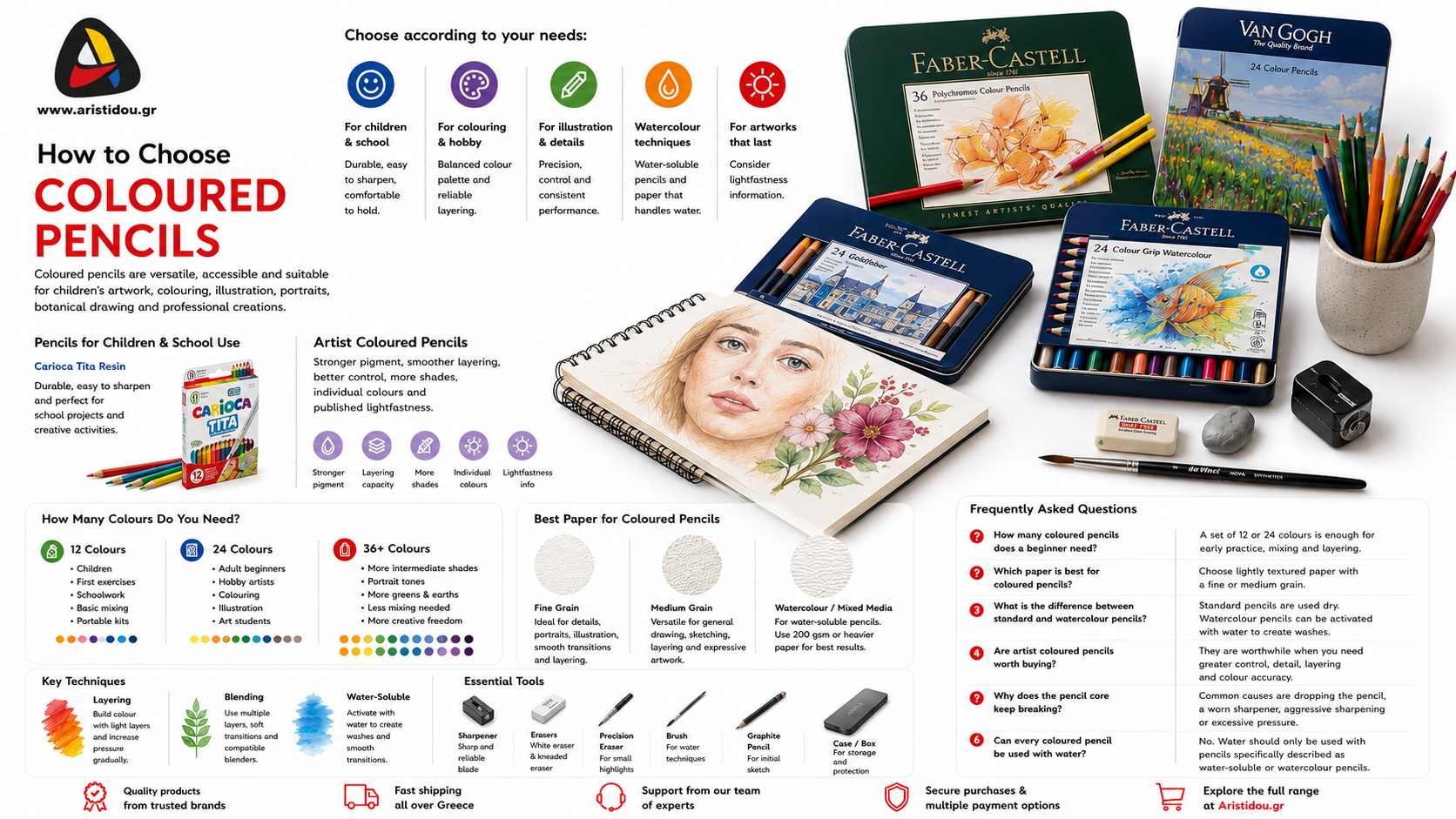 Which Coloured Pencils Do You Need?
A simple starting point is to consider how the pencils will be used:
- For children and schoolwork, choose durable pencils that sharpen easily and feel comfortable to hold.
- For adult colouring and hobby drawing, look for a balanced colour range and reliable layering.
- For illustration, portraits and detailed artwork, choose artist pencils with consistent cores and controlled pigment application.
- For techniques combining drawing and watercolour, select water-soluble pencils and paper designed to handle moisture.
- For artwork intended for display, sale or long-term storage, consider the lightfastness information provided by the manufacturer.
School Pencils or Artist Coloured Pencils?
Pencils for Children and School Use
School coloured pencils are designed for frequent colouring, classroom work and creative activities at home.
Useful qualities include:
- durable cores,
- easy sharpening,
- comfortable handling,
- a practical basic palette,
- accessible pricing,
- straightforward colour application.
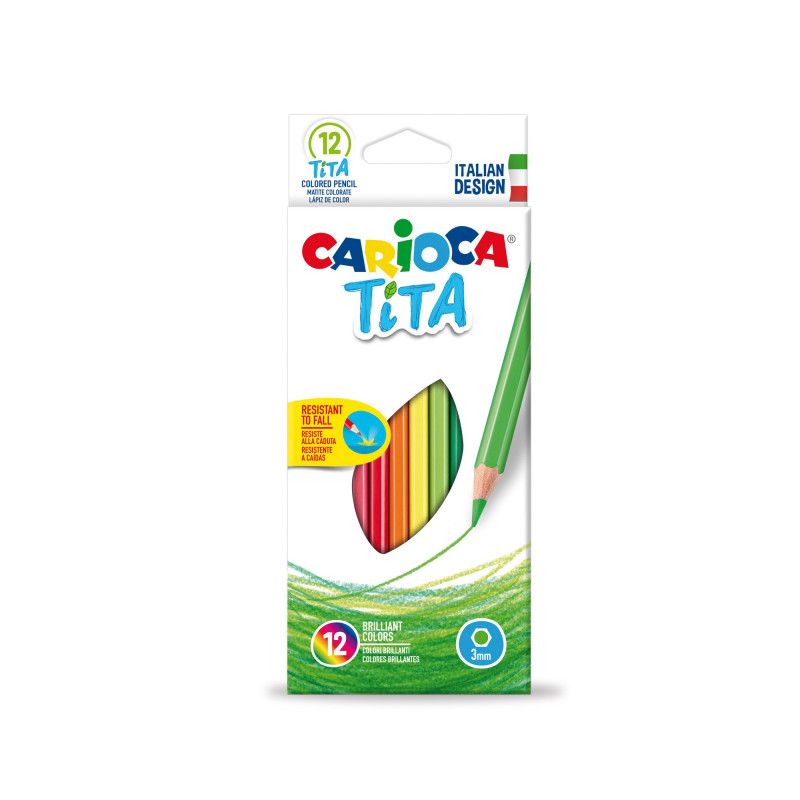
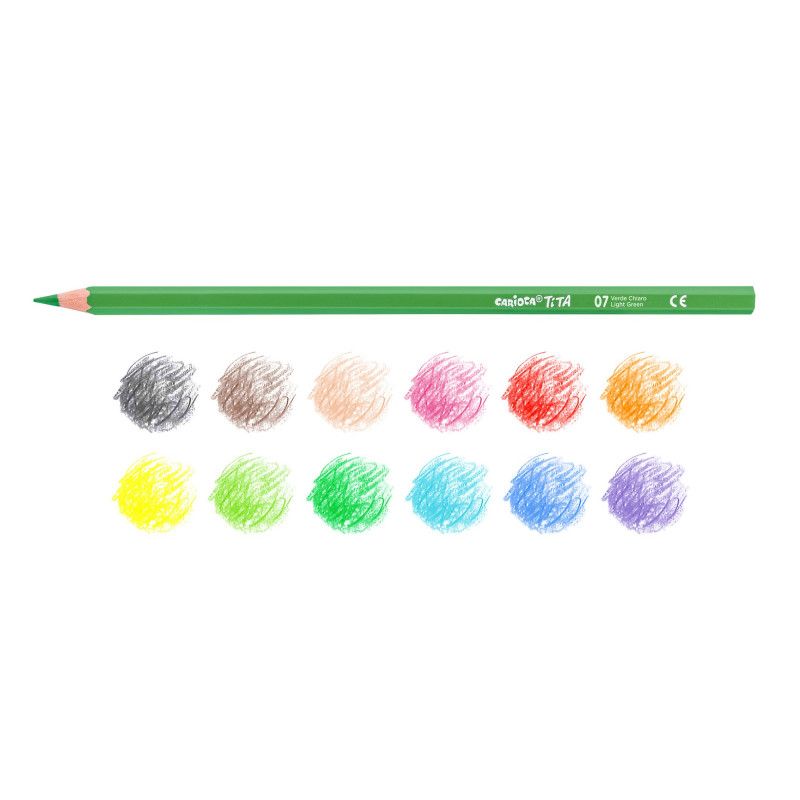
Carioca Tita Resin pencils are a practical option for children, students and frequent creative use.
Product page:
https://aristidou.gr/products/xylompogies-carioca-tita-resin
For a complete children’s drawing set, combine them with a suitable drawing pad, sharpener, eraser and pencil case.
Artist Coloured Pencils
Artist pencils are intended for users who want greater control over colour, detail and layering.
Depending on the range, they may offer:
- stronger pigment performance,
- more consistent application,
- greater layering capacity,
- a broader colour palette,
- better control over tonal transitions,
- individual replacement colours,
- published lightfastness information.
A beginner does not necessarily need the largest professional set. A carefully selected range of 24 or 36 colours can cover many subjects while helping the user learn how colours interact.
What Changes Between Pencil Ranges?
Two sets containing the same number of pencils can perform very differently.
Core Firmness
A softer core usually provides stronger colour more quickly and makes it easier to cover larger areas.
A firmer core may offer greater control for:
- fine details,
- outlines,
- hair and fur textures,
- small patterns,
- multiple light layers.
The right choice depends on your style. Illustration and precise work may benefit from a firmer core, while colouring and broader areas may feel easier with a softer application.
Pigment Performance
Colour intensity should not depend only on heavy pressure.
A good coloured pencil allows the artist to develop colour gradually with light layers. This produces greater depth and keeps the paper texture available for further work.
Core Strength
Pencil cores may break after being dropped, sharpened with a worn blade or used with excessive pressure.
Core durability is particularly important for school use and pencils that are carried frequently.
Individual Colours
Some artist ranges allow users to replace only the colours they use most often.
This can be useful for portrait artists, botanical illustrators and anyone who regularly uses particular greens, earth tones, skin colours or neutral shades.
Oil-Based Coloured Pencils
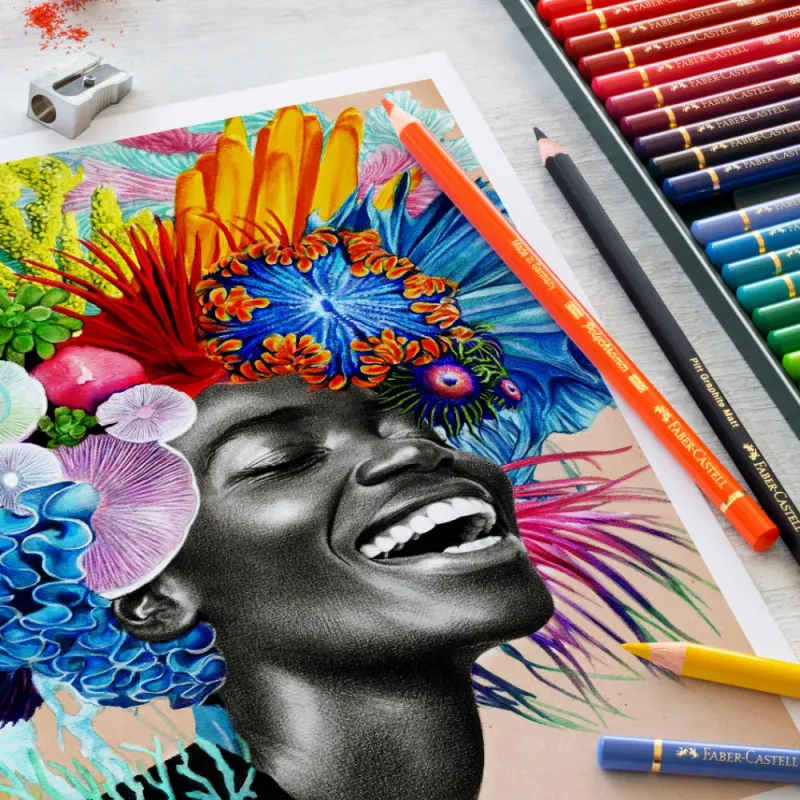
Oil-based coloured pencils are often selected for detailed drawing, illustration and artwork requiring controlled layers.
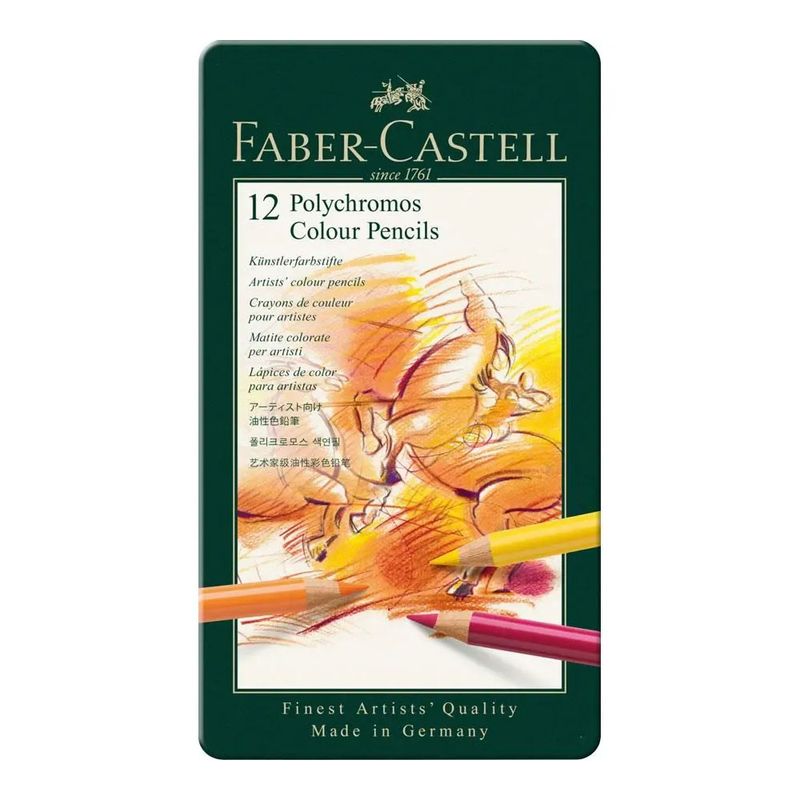
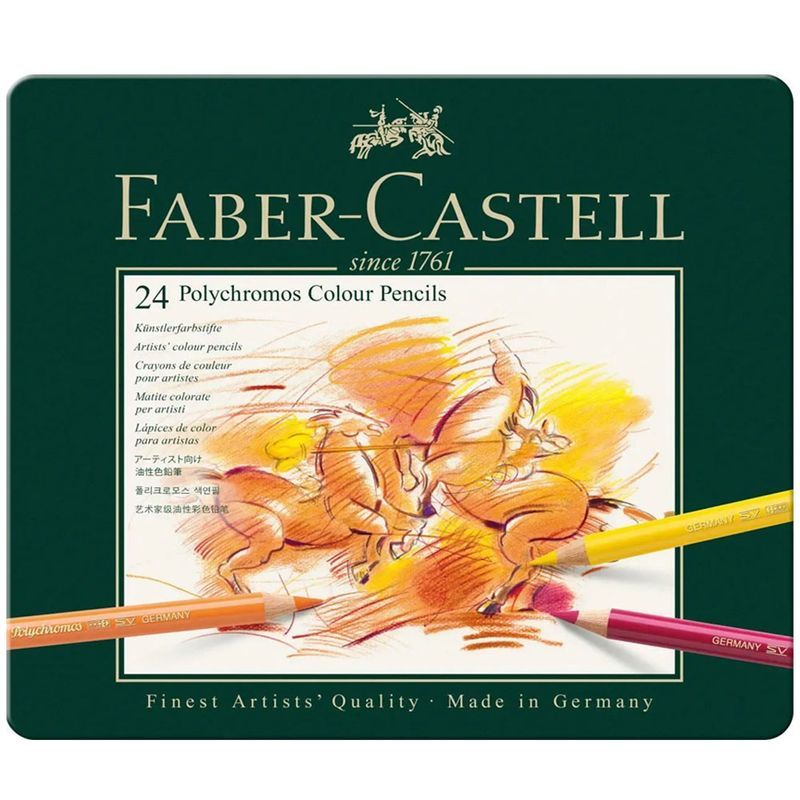
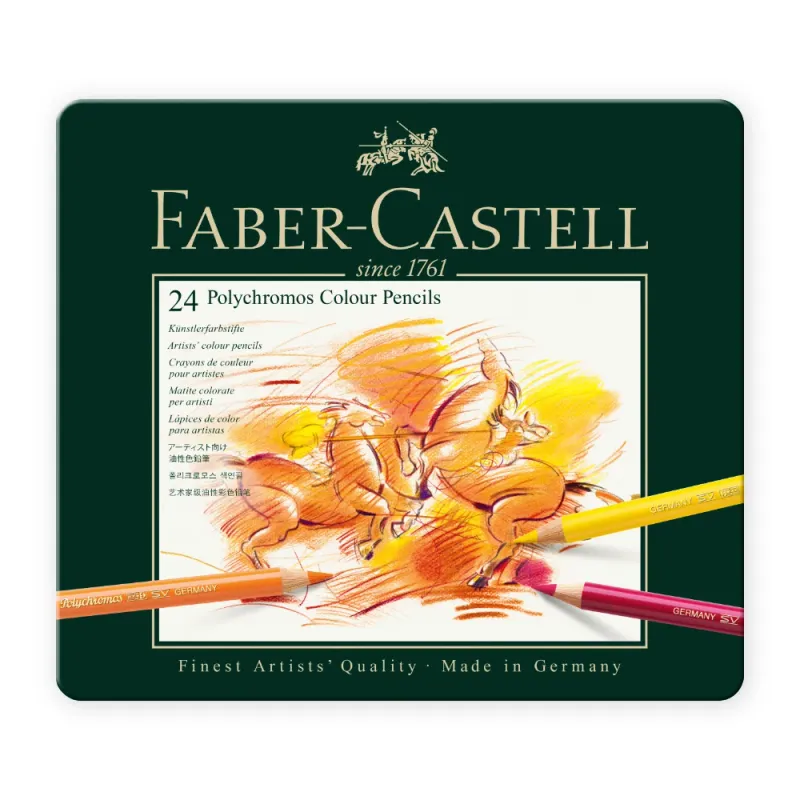
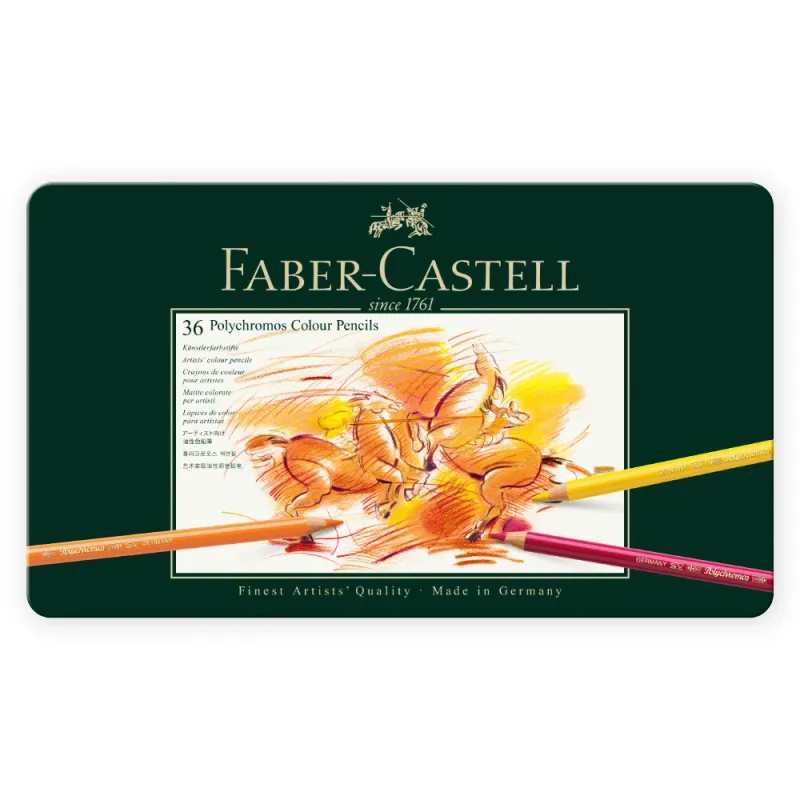
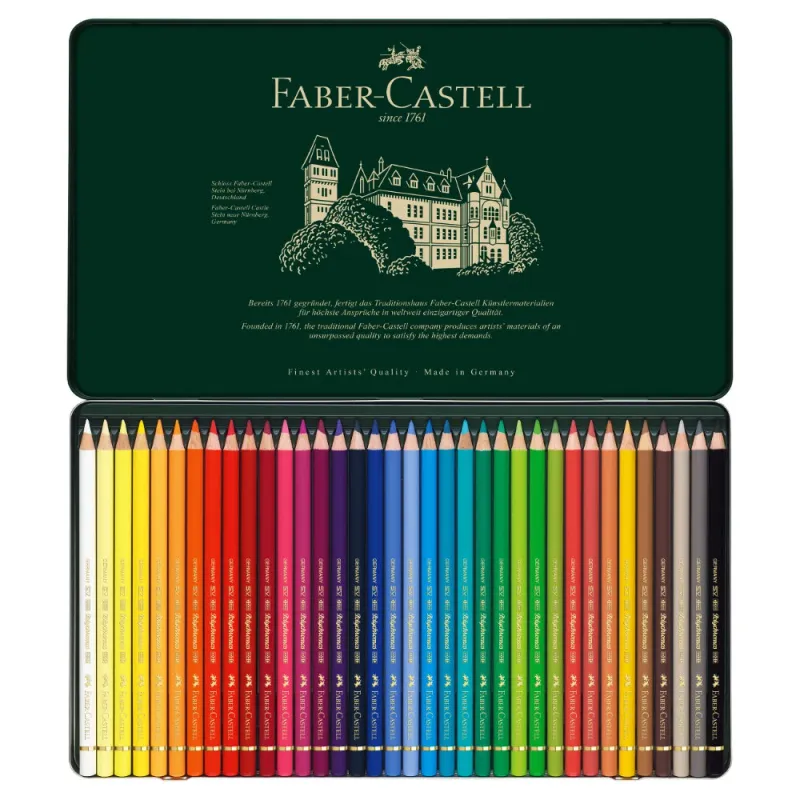
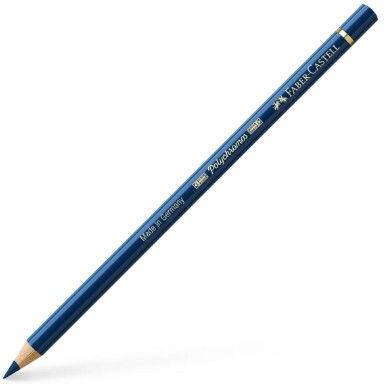
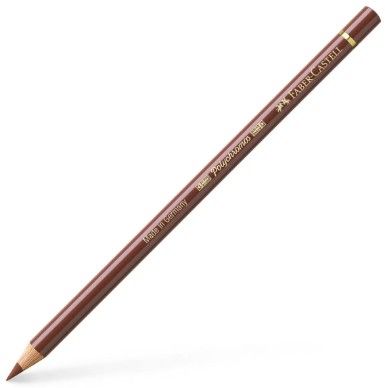
Faber-Castell Polychromos are available in sets and individual colours, making them suitable for artists who want to build a personalised palette.
They can be used for:
- portraits,
- botanical illustration,
- realistic drawing,
- animal and fur textures,
- detailed colouring,
- layered artwork.
Explore the range:
https://aristidou.gr/products/faber-castell-polychromos-xylompogies-ladiou-metalliki-thiki
Individual colours:
https://aristidou.gr/products/polychromos-xylompogia-faber-castell
Pair artist pencils with lightly textured drawing paper, a reliable sharpener and a precision eraser.
What Are Watercolour Pencils?
Watercolour pencils can be used dry or activated with water.
You can draw in the same way as with a standard coloured pencil, then use a damp brush to dissolve the marks and create washes.
They are useful for:
- illustration,
- botanical drawing,
- travel sketching,
- mixed-media work,
- colour washes,
- controlled details.
Faber-Castell Colour Grip Watercolour pencils support both dry drawing and water-soluble techniques.
Product page:
https://aristidou.gr/products/faber-castell-colour-grip-watercolour-coloured-pencils
Three Ways to Use Them
- Draw on dry paper and blend the colour with a damp brush.
- Lift colour from the pencil tip using a wet brush.
- Allow the wash to dry, then add crisp details with a dry pencil.
Use watercolour or mixed-media paper when applying water. Ordinary drawing paper may buckle or weaken.
How Many Colours Do You Need?
Sets of 12
A 12-colour set is suitable for:
- children,
- schoolwork,
- first drawing exercises,
- portable creative kits,
- learning basic colour mixing.
A smaller selection encourages beginners to build new shades through layering.
Sets of 24
A 24-colour set provides useful variety without becoming difficult to manage.
It is suitable for:
- adult beginners,
- hobby artists,
- colouring,
- illustration,
- art students,
- home drawing kits.
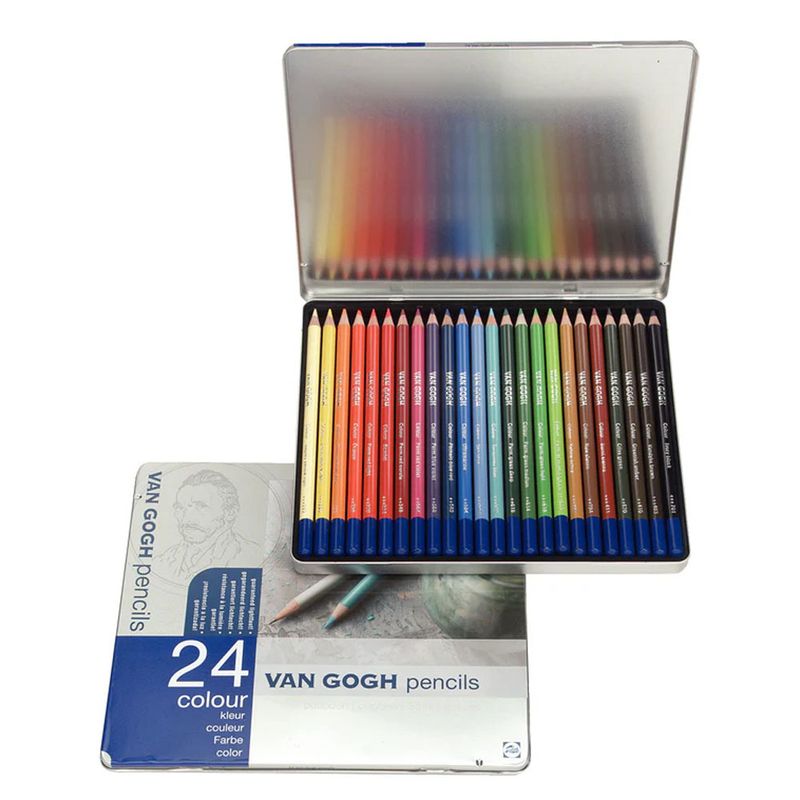
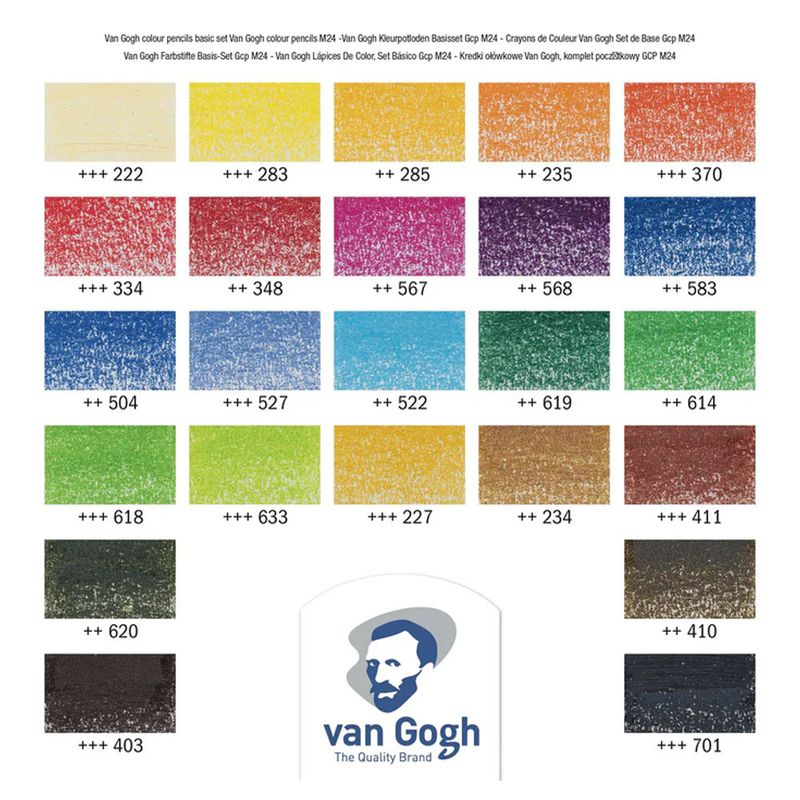
The Van Gogh Colour Pencils Set of 24 in a metal tin provides an organised palette for users who want a broader selection.
Product page:
https://aristidou.gr/products/van-gogh-colour-pencils-set-24-metalliki-thiki
Sets of 36 and More
Larger sets provide:
- more intermediate shades,
- additional portrait colours,
- a wider selection of greens and earth tones,
- less manual mixing for specific colours,
- greater creative freedom.
A larger set is convenient, but it cannot replace good technique and suitable paper.
Which Paper Is Best for Coloured Pencils?
For coloured pencils, choose lightly textured paper with a fine or medium grain.
A subtle texture holds pigment and allows several layers to be built. At the same time, it remains refined enough for controlled details.
Lightly Textured Paper with a Fine Grain
This is suitable for:
- detailed portraits,
- illustration,
- small patterns,
- gradual transitions,
- realistic drawing,
- controlled layering.
The fine grain holds colour while allowing the pencil to create precise marks.
Lightly Textured Paper with a Medium Grain
This works well for:
- general coloured-pencil drawing,
- sketching,
- heavier layering,
- expressive artwork,
- coloured portraits,
- combinations of graphite and coloured pencil.
The more noticeable texture can become part of the visual character of the finished drawing.
Paper for Watercolour Pencils
When water is involved, choose:
- watercolour paper,
- mixed-media paper,
- paper around 200 gsm or heavier, depending on water use,
- a surface specifically described as suitable for wet media.
Lightly textured watercolour paper is a practical option because it holds the dry pencil marks before they are activated with water.
Explore drawing pads and sketchbooks:
https://aristidou.gr/products/mplok-zografikis
How to Layer Coloured Pencils
Layering means applying several light applications of colour.
For greater control:
- Begin with very light pressure.
- Apply colour using small circular movements or controlled strokes.
- Add a second and third colour gradually.
- Increase pressure only during the final layers.
- Preserve some of the paper grain while additional layers are still required.
Heavy pressure during the first layer fills the paper texture too quickly and makes further colour more difficult to apply.
How to Blend Colours
Coloured pencils can be blended using:
- several light layers,
- gradual transitions from pale to dark,
- a white or pale pencil,
- a compatible colourless blender,
- controlled pressure,
- water, only with water-soluble pencils.
For example, a leaf can be developed with yellow, light green, dark green and a small amount of blue rather than a single green pencil.
This produces greater depth and a more natural result.
Choosing a Sharpener
A good sharpener affects both drawing accuracy and pencil life.
Look for:
- a sharp, secure blade,
- an opening that matches the pencil diameter,
- a collection container for cleaner use,
- a second opening for jumbo pencils,
- the ability to create a fine point for details.
Hold the sharpener firmly and rotate the pencil with a controlled movement.
When a core breaks repeatedly, check the sharpener blade and whether the pencil has previously been dropped.
Which Eraser Should You Use?
Coloured pencil cannot always be removed completely, particularly after heavy pressure.
Useful options include:
- a white eraser for gentle corrections,
- a kneaded eraser for gradually lifting pigment,
- a precision eraser for small highlights,
- an electric eraser for very fine details.
Corrections are easier when colour has been applied in light layers.
Common Buying and Drawing Mistakes
Choosing Only by the Number of Colours
A large, inexpensive set is not automatically more useful than a smaller, carefully selected range.
Applying Heavy Pressure Too Early
Strong pressure fills the grain of the paper and limits further layering.
Using Unsuitable Paper
Paper with insufficient texture may not hold several layers. An excessively rough surface can make small details difficult.
For a balanced result, use lightly textured paper with a fine or medium grain.
Adding Water to Standard Coloured Pencils
Water should only be used with pencils specifically described as water-soluble.
Using a Worn Sharpener
A blunt blade can repeatedly break the pencil core and waste material.
Buying Artist Pencils Without Suitable Accessories
Paper, sharpening, erasing and drawing technique all influence the finished result.
Recommendations by User
For Children and Students
Choose durability, comfortable handling and a practical basic colour range.
Carioca Tita Resin pencils are suitable for frequent use.
For Beginners and Hobby Artists
A 24-colour set offers variety without becoming overwhelming.
Combine it with a sketchbook made from lightly textured drawing paper and a quality sharpener.
For Water-Soluble Techniques
Choose watercolour pencils, watercolour or mixed-media paper and a brush with good water control.
For Detailed Artist Work
Consider an artist range such as Polychromos when controlled layering, detail and a broad palette are priorities.
What Else Do You Need?
A complete coloured-pencil kit may include:
- a sketchbook or drawing pad with lightly textured paper,
- watercolour paper for water-soluble pencils,
- a sharpener with a reliable blade,
- a white eraser,
- a kneaded eraser,
- a precision eraser,
- a watercolour brush or water brush,
- a graphite pencil for the initial sketch,
- a pencil case or storage box.
Frequently Asked Questions
How many coloured pencils does a beginner need?
A set of 12 or 24 colours is enough for early exercises, basic colour mixing and learning how to build layers.
Which paper is best for coloured pencils?
Choose lightly textured paper with a fine or medium grain. It holds pigment, supports layering and remains suitable for controlled details.
What is the difference between standard and watercolour pencils?
Standard coloured pencils are used dry. Watercolour pencils can be activated with water to create washes and fluid transitions.
Are artist coloured pencils worth buying?
They are worthwhile when you need greater control over detail, layering, colour selection and artwork permanence. They are not essential for basic school colouring.
Why does the pencil core keep breaking?
Common causes include dropping the pencil, using a worn sharpener, aggressive sharpening or applying excessive pressure.
Can every coloured pencil be used with water?
No. Water should only be used with pencils specifically described as water-soluble or watercolour pencils.