Which Brushes Are Best for Acrylic Painting?
Choosing the right brush has a significant impact on how acrylic paint flows, how accurately details can be rendered and how much texture appears in the finished painting. The wrong brush may leave unwanted marks, hold too little paint or lose its shape after only a few uses.
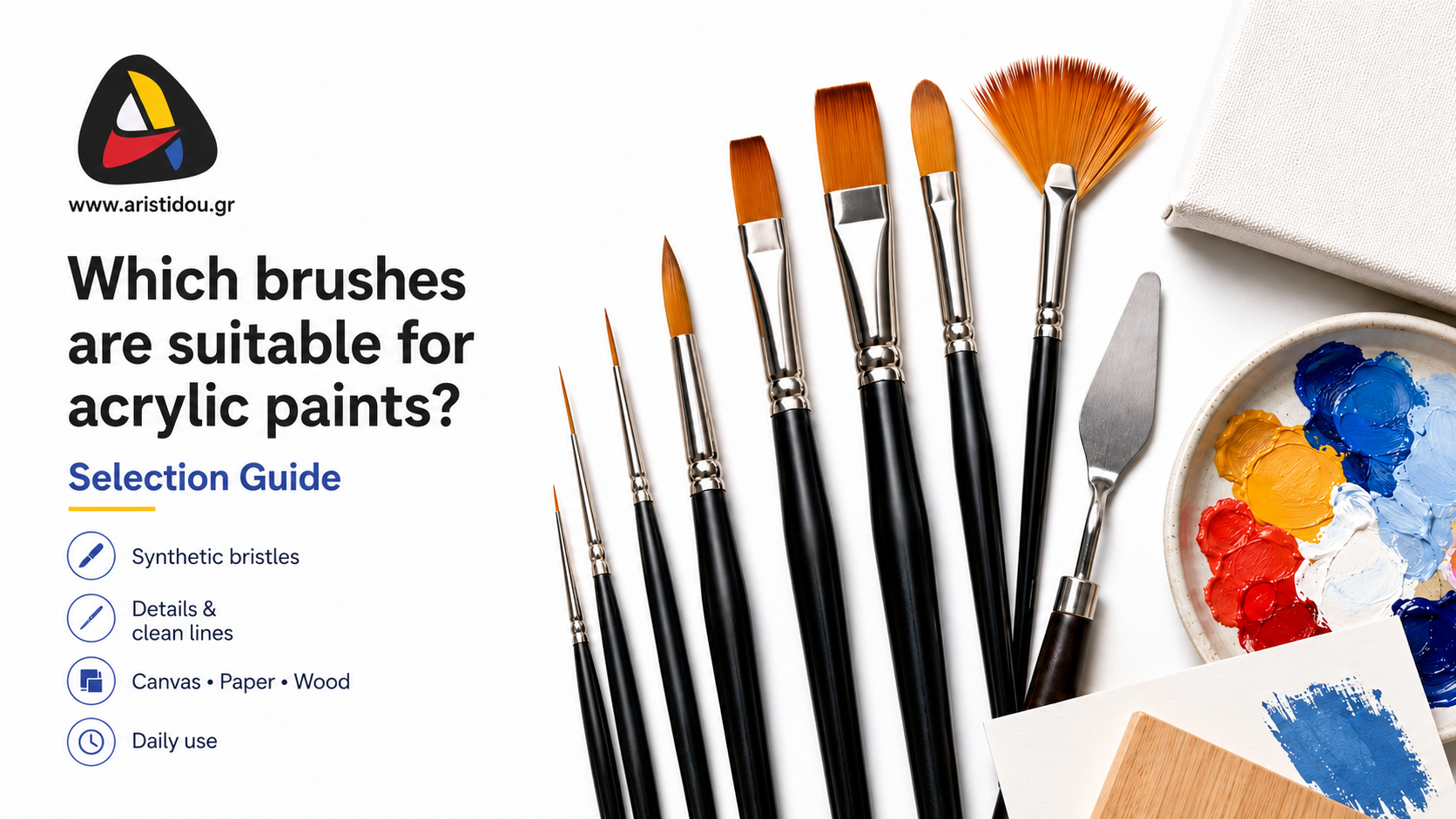
Synthetic brushes are generally the most practical choice for acrylic painting because they are durable, resilient and relatively easy to clean. However, the ideal brush shape, size and stiffness will depend on your technique, working surface and desired finish.
 Synthetic or natural brushes for acrylic paint?
Synthetic brushes are commonly made from nylon or polyester fibres. They retain their shape well, provide controlled spring and tolerate frequent contact with water and acrylic mediums.
They are particularly suitable for:
- smooth paint application,
- clean lines and detailed work,
- layered painting,
- glazing,
- painting on canvas, paper and wood.
Natural-bristle brushes can create expressive marks and irregular textures, but they often require more careful maintenance. Repeated exposure to water may also cause some natural fibres to deteriorate more quickly.
For beginners, students and everyday studio use, a good-quality synthetic brush set is usually the most reliable and cost-effective option.
 Which brush shapes do you need?
You do not need dozens of brushes to paint successfully with acrylics. A small, carefully selected collection can cover most fundamental techniques.
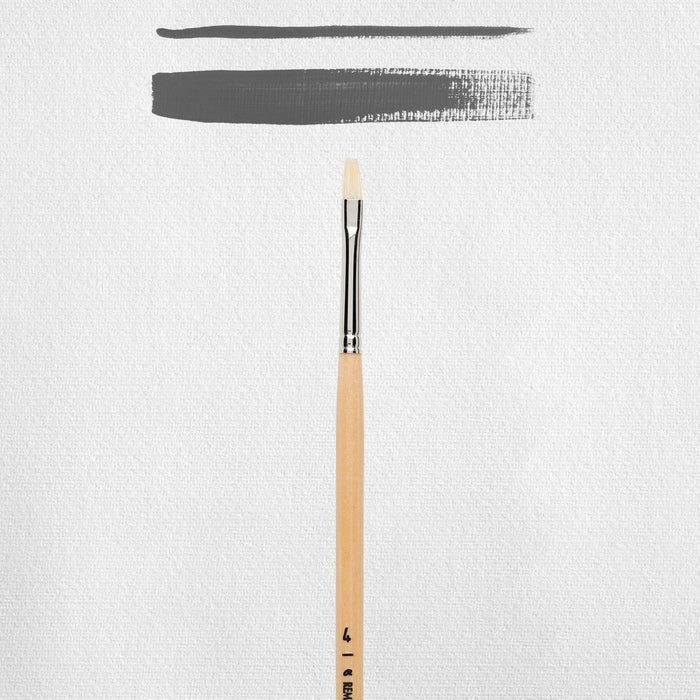
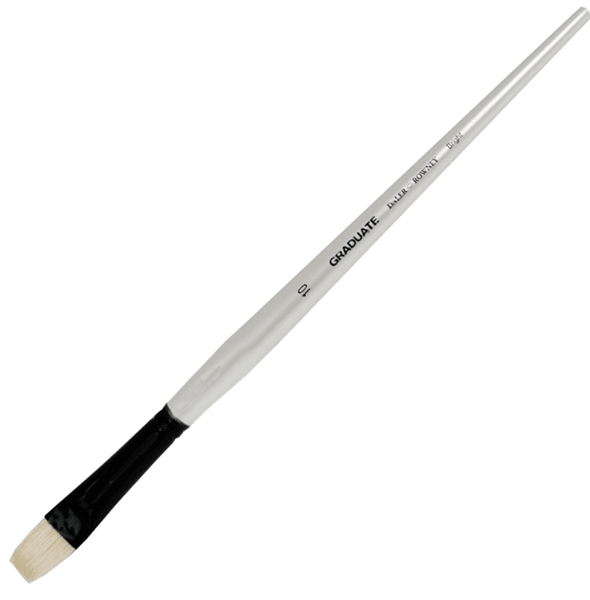
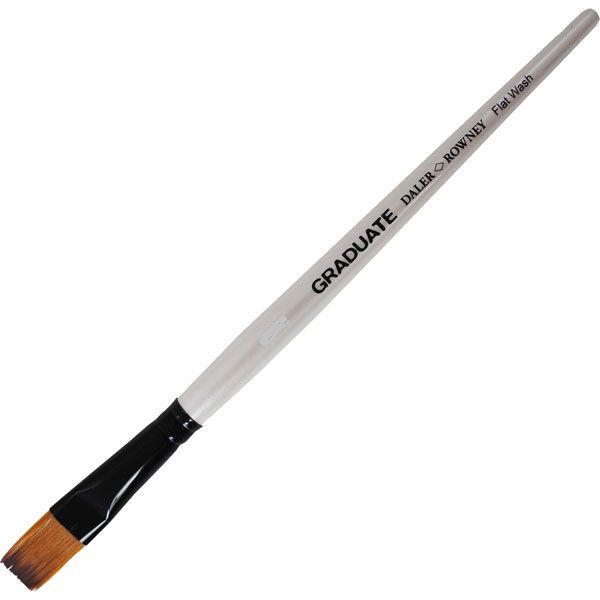
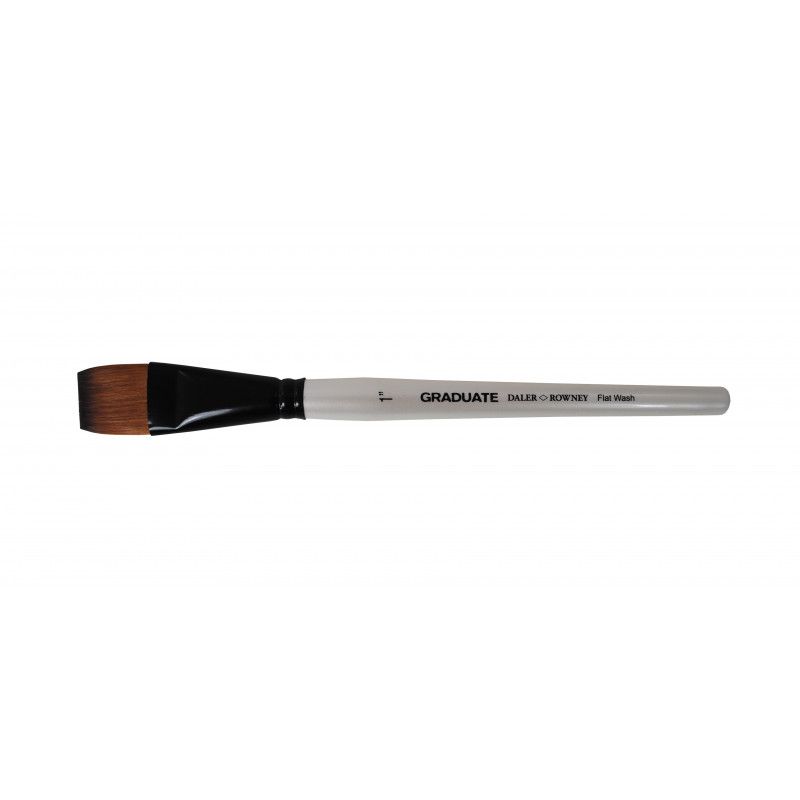
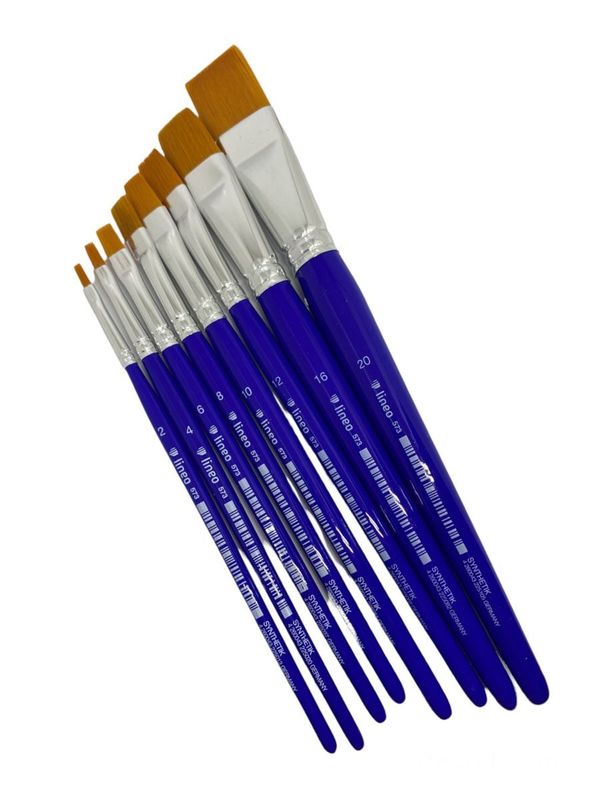
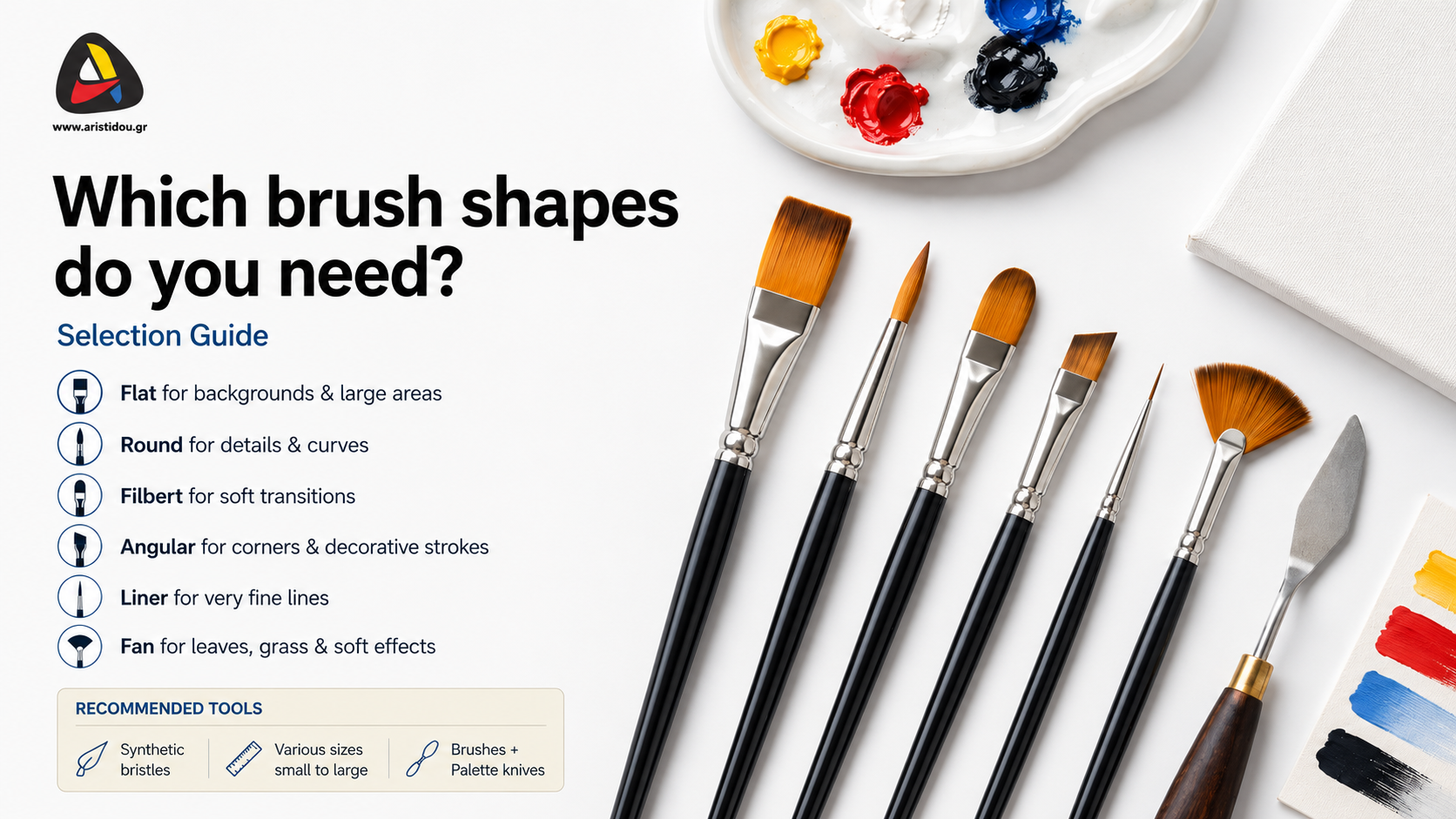
Flat brush
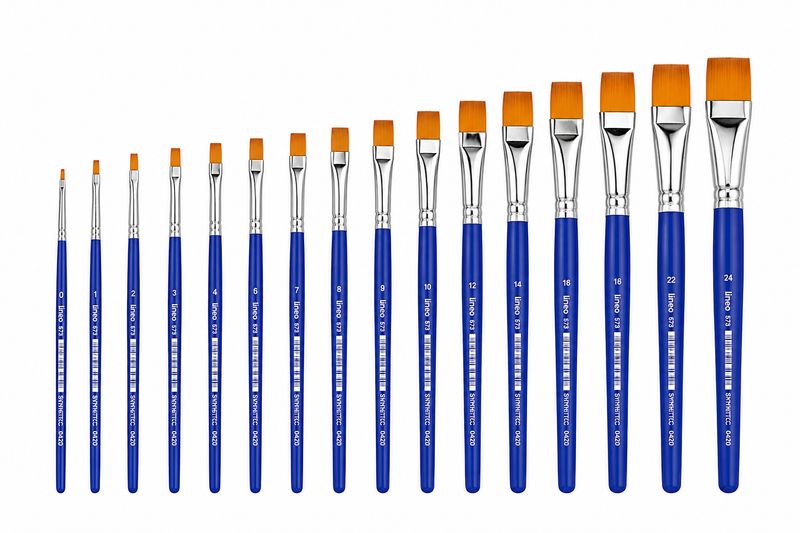
A flat brush has a straight edge and can hold a generous amount of paint. It is ideal for:
- backgrounds,
- broad areas,
- geometric forms,
- strong, defined marks,
- applying gesso or varnish.
A wide flat brush allows you to cover a canvas efficiently, while a smaller flat brush provides greater control over edges and shapes.
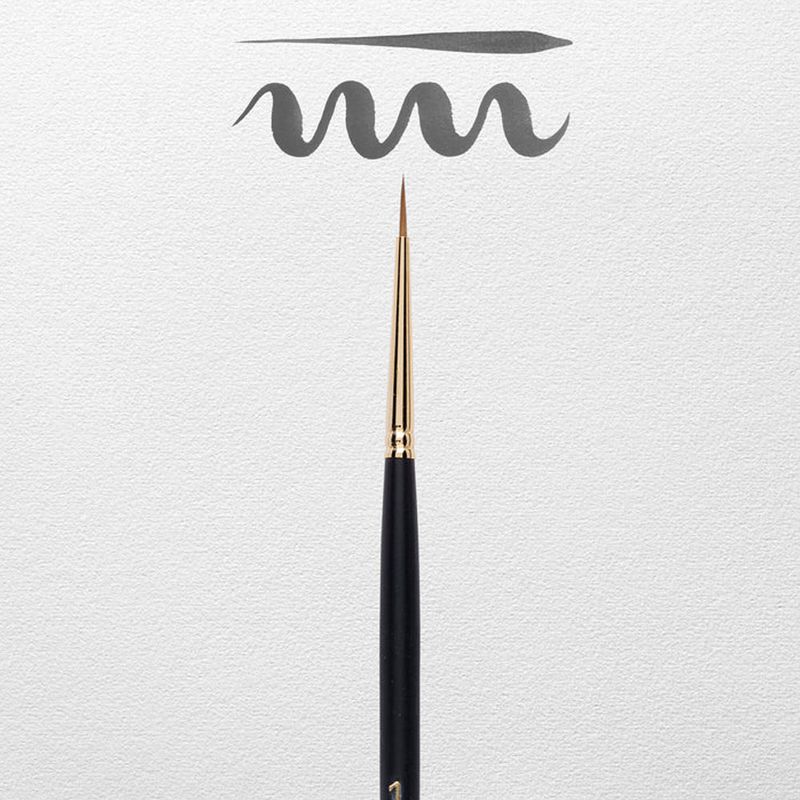
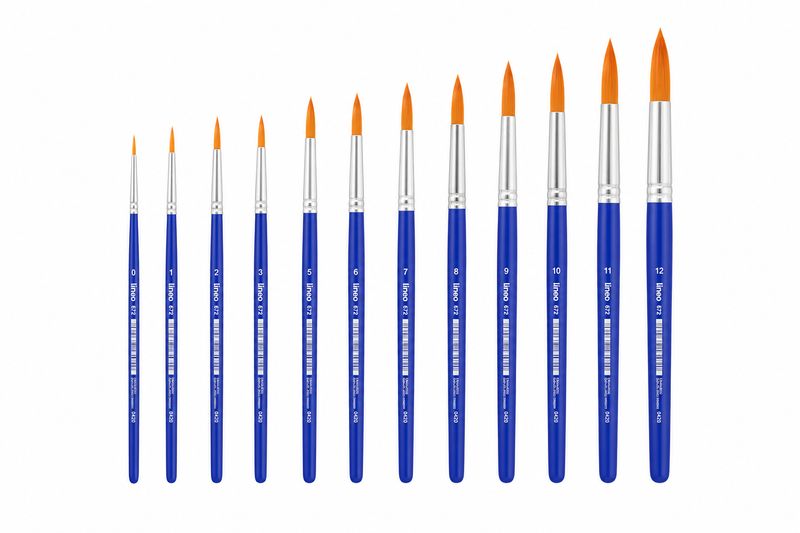
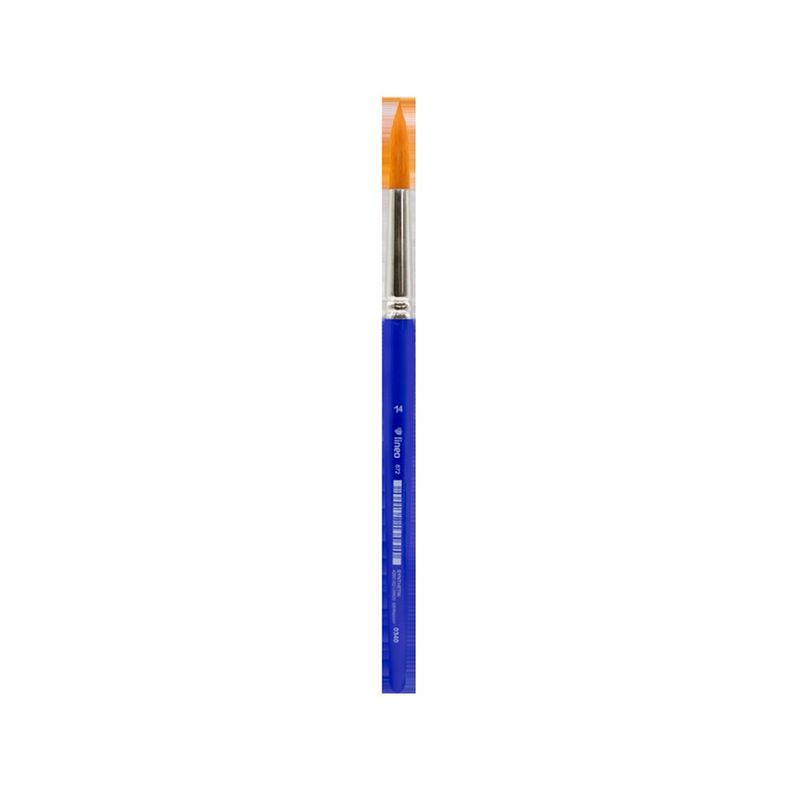
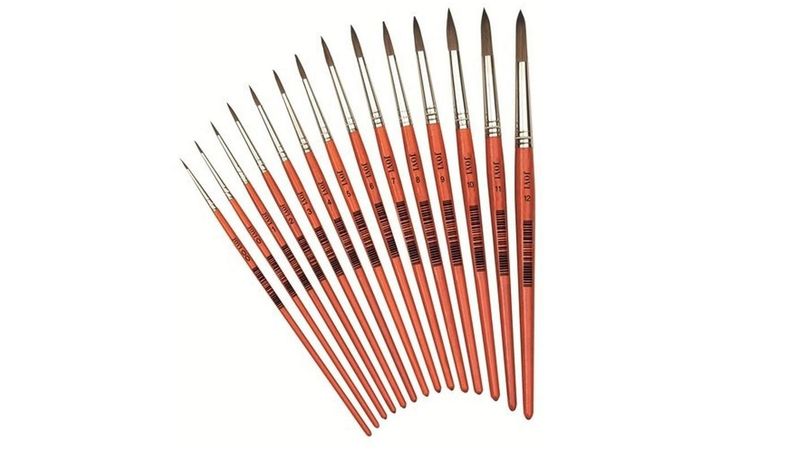
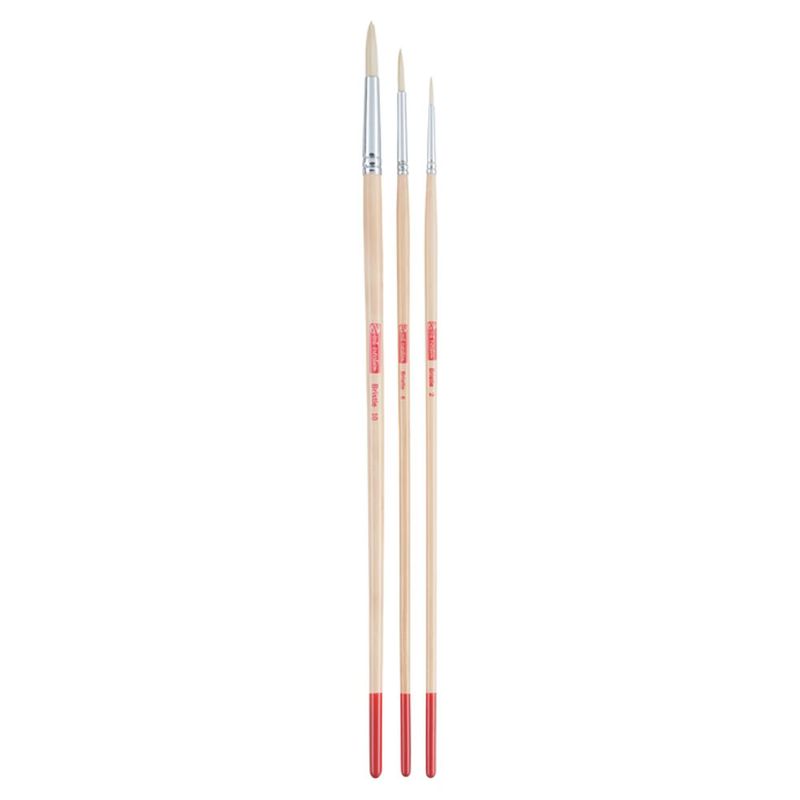
Round brush
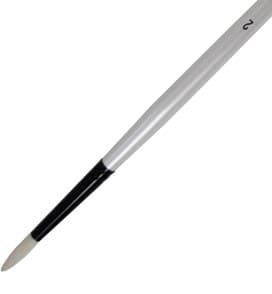
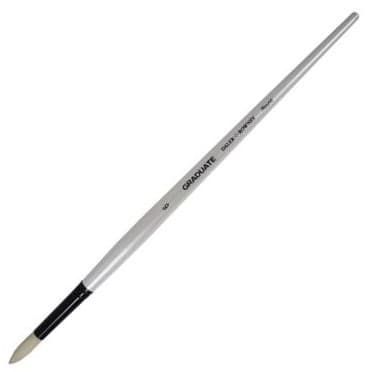
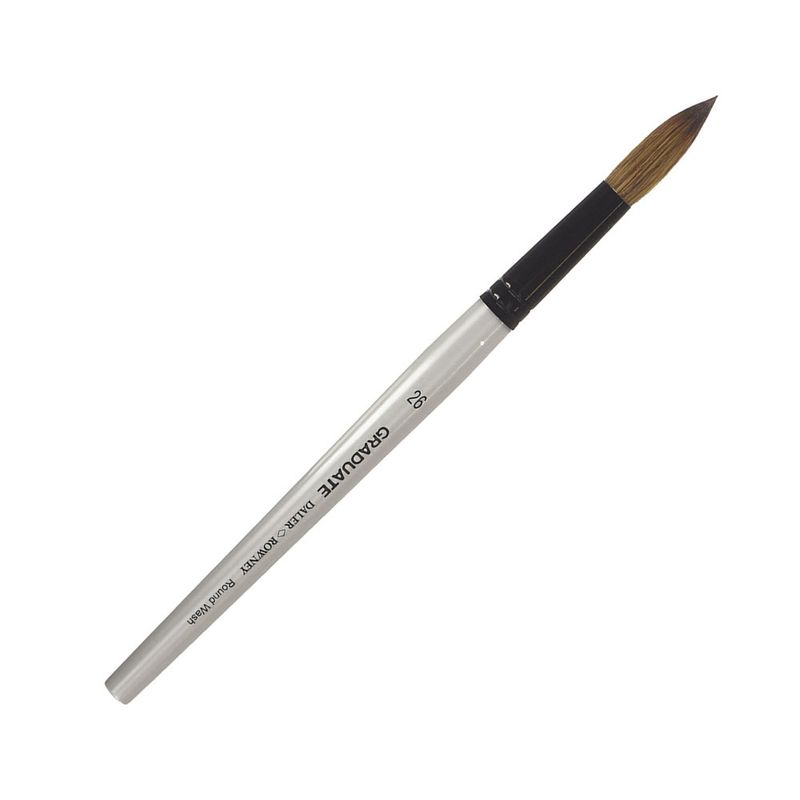
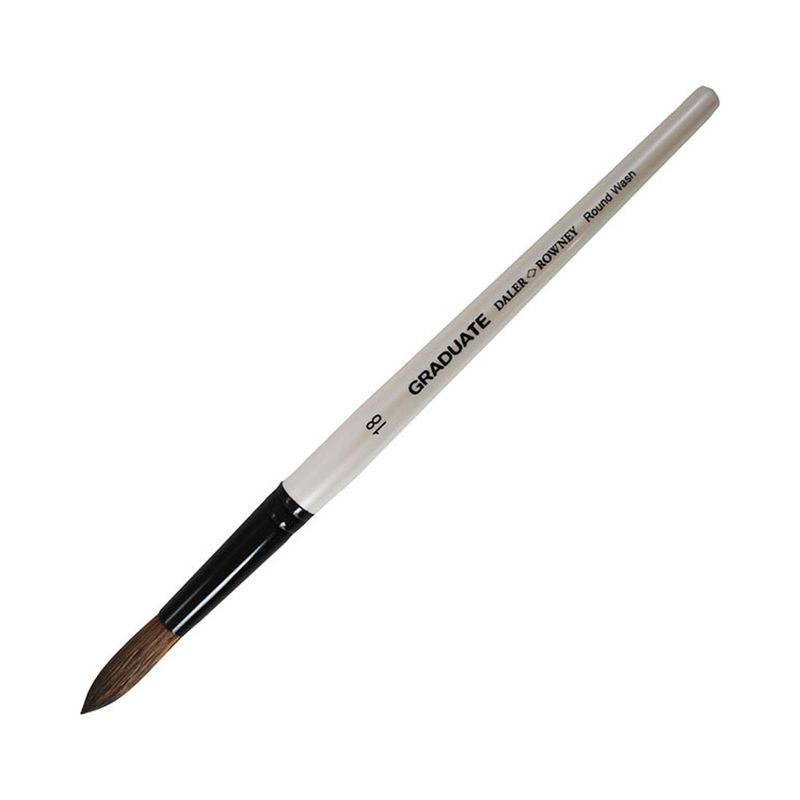
A round brush has a pointed or gently rounded tip and is one of the most versatile brush shapes.
It can be used for:
- outlines,
- curved strokes,
- small areas,
- fine details,
- expressive mark-making.
By adjusting the pressure, you can create both delicate lines and fuller strokes with the same brush.
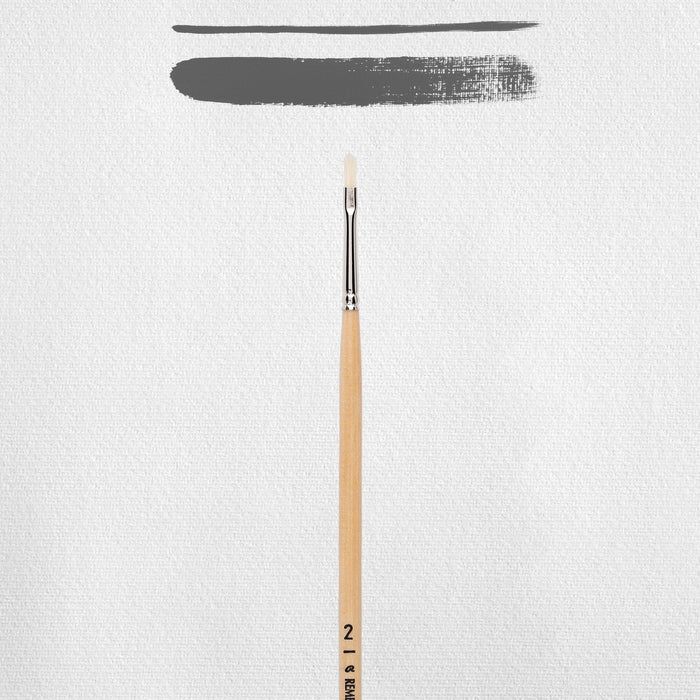
Filbert brush
A filbert combines the width of a flat brush with a softly rounded edge. It blends paint smoothly without creating the sharp corners associated with traditional flat brushes.
It is especially useful for:
- portrait painting,
- flower petals,
- clouds,
- soft shading,
- organic forms.
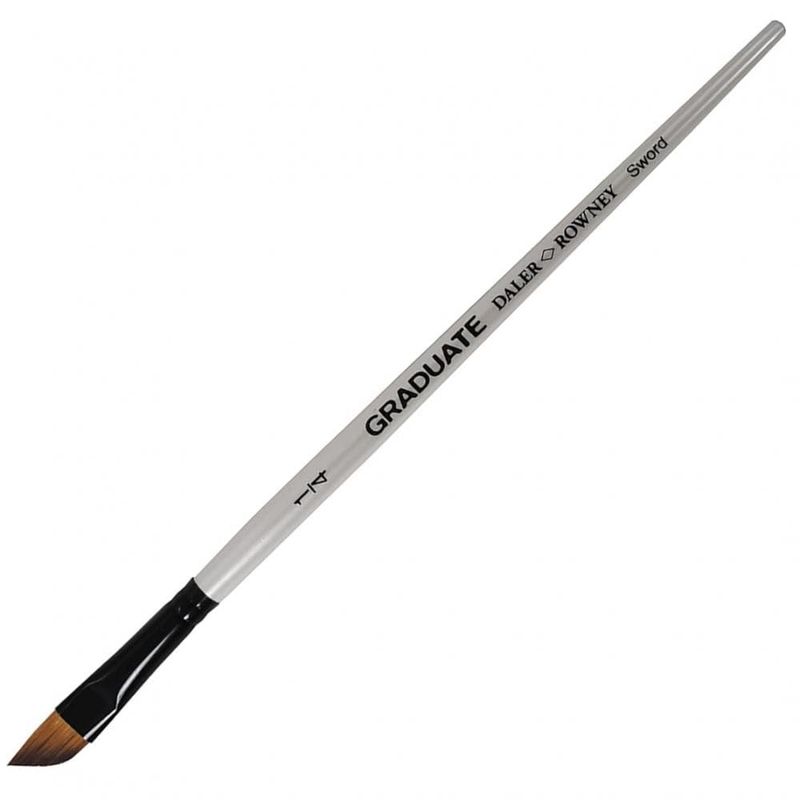
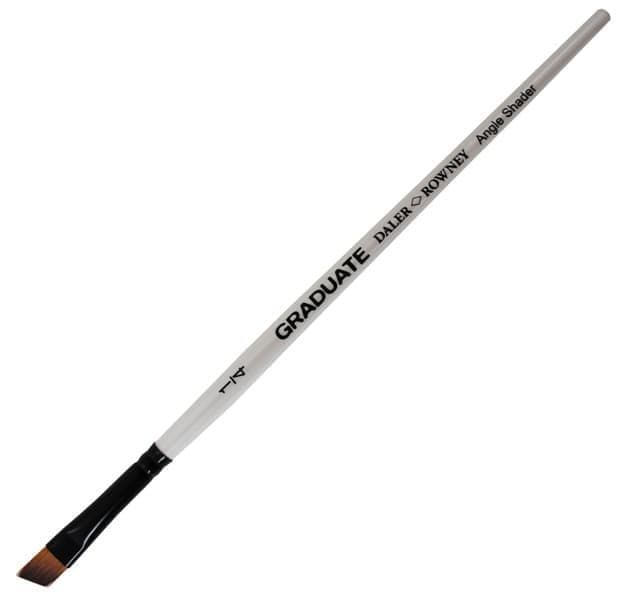
Angular brush
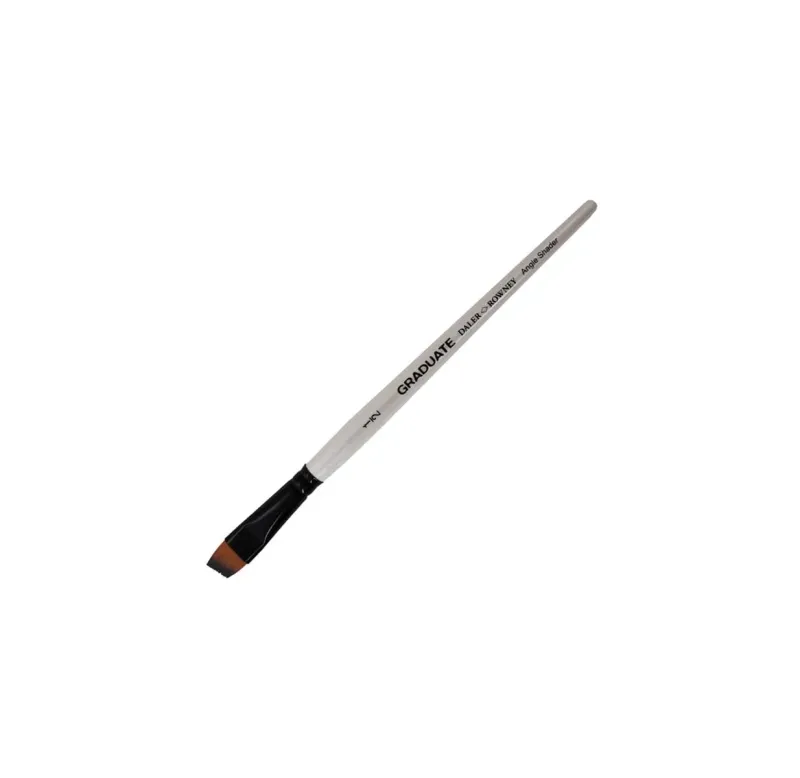
An angular or angled brush has a diagonal edge. It offers accuracy and control when painting corners, curves, leaves, ribbons and decorative motifs.
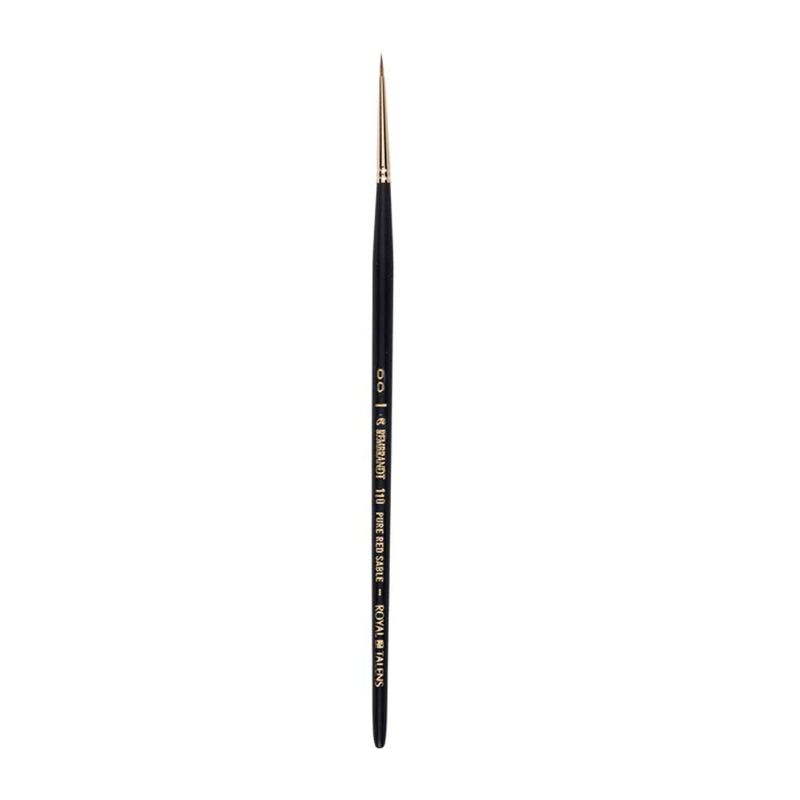
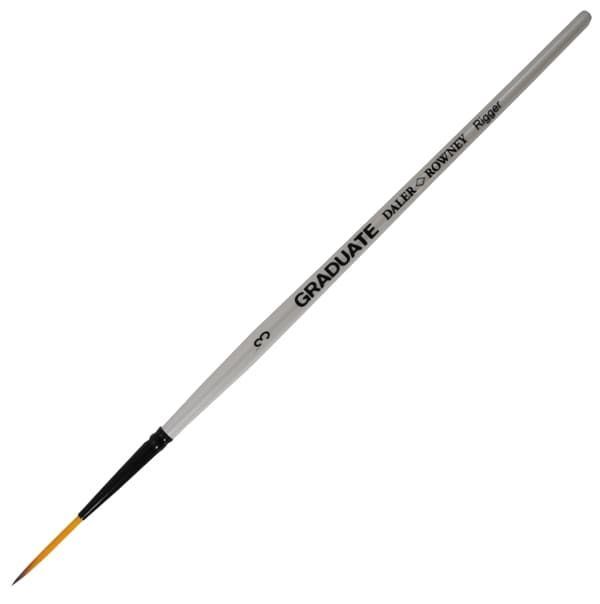
Liner brush
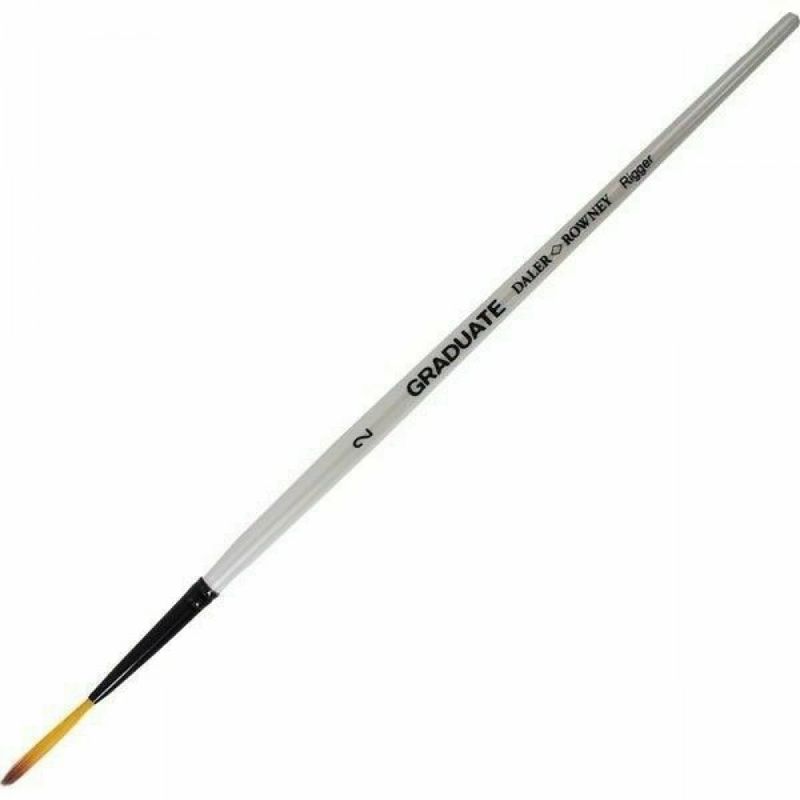
A liner has long, fine bristles designed for precise, continuous lines. It is commonly used for signatures, branches, hair, outlines and intricate details.
For a smoother flow, the acrylic paint should be slightly fluid. Rather than adding excessive water, use an appropriate acrylic medium to adjust the consistency.
Fan brush
A fan brush produces light, repeated marks and subtle blending effects. It is useful for foliage, grass, fur, clouds and atmospheric textures.
Which brush sizes should you buy?
Brush size should correspond to the scale of your painting. Using a very small brush on a large canvas can slow down the process and create uneven coverage. A brush that is too large, however, will make detailed work unnecessarily difficult.
A practical starter collection may include:
- one large flat brush for backgrounds,
- one medium flat or filbert brush for major shapes,
- one medium round brush,
- one small round brush for details,
- one fine liner brush.
Expert tip: Brush sizing is not standardised across all manufacturers. Always consider the actual width and length of the bristles rather than relying entirely on the number printed on the handle.
Soft or firm bristles?
The stiffness of the bristles determines how much pressure the brush can apply and how visible each mark will be.
Softer brushes are suitable for:
- smooth colour transitions,
- thin layers,
- glazing,
- fine details,
- diluted acrylics.
Firmer brushes are better for:
- thick paint,
- visible brushwork,
- textured surfaces,
- dry-brush techniques,
- heavy-body acrylics.
A mixed collection of softer and firmer brushes offers greater flexibility and allows you to move easily between smooth and expressive techniques.
Brush or palette knife?
Brushes provide control, accuracy and a wide variety of marks. Palette knives create thicker applications, sharp edges and pronounced texture.
A palette knife is particularly useful for:
- impasto,
- abstract painting,
- mixing colour directly on the canvas,
- creating raised surfaces,
- applying modelling paste.
Both tools can be used in the same painting. Begin with brushes to establish the composition and main forms, then add palette-knife details for texture, contrast and visual impact.
At Aristidou.gr, you can explore brushes in different shapes and sizes, palette knives, acrylic paints and specialist mediums for a complete acrylic painting setup.
Common mistakes when using acrylic brushes
The most damaging mistake is allowing acrylic paint to dry inside the bristles. Once dry, acrylic forms a hard film that may permanently affect the flexibility and shape of the brush.
You should also avoid:
- leaving brushes standing in water,
- pressing the bristles too firmly against the surface,
- using one brush for every part of the painting,
- pulling dried paint from the bristles,
- loading paint all the way into the metal ferrule.
Paint that collects near the base of the bristles is difficult to remove and can cause the brush head to spread or lose its original shape.
How to clean acrylic paintbrushes properly
Clean your brushes immediately after use:
- Remove excess paint with a cloth or paper towel.
- Rinse the brush in lukewarm water.
- Apply mild soap or a specialist brush cleaner.
- Gently work the soap through the bristles from the ferrule towards the tip.
- Rinse until the water runs clear.
- Reshape the brush head.
- Allow the brush to dry horizontally.
Avoid very hot water, as it may weaken the adhesive inside the ferrule.
Which brush set is best for beginners?
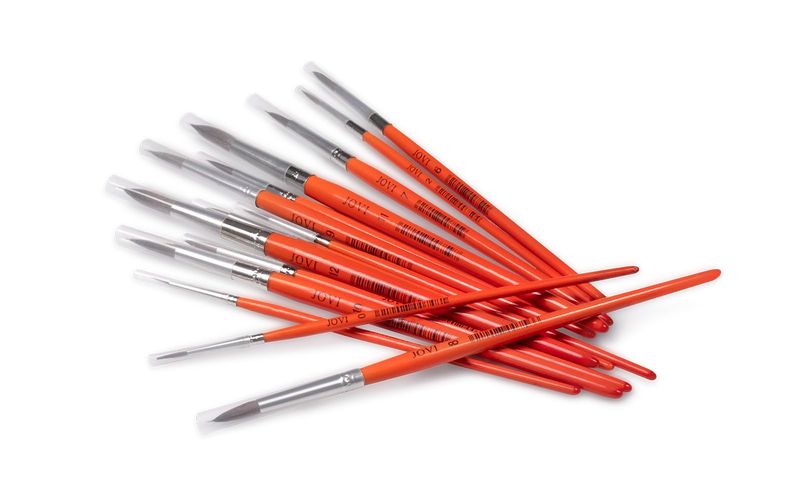
Beginners benefit more from a variety of brush shapes than from several brushes of the same type. Look for a set containing flat, round and detail brushes in a balanced range of small, medium and large sizes.
For the best results, combine your brushes with:
- acrylic paints,
- stretched canvas or an acrylic paper pad,
- a mixing palette,
- gesso primer,
- acrylic medium,
- a brush-cleaning container,
- acrylic varnish.
Explore individual brushes and complete brush sets at Aristidou.gr for beginners, students and experienced artists. Choosing the right tools will help you paint with greater precision, comfort and control.
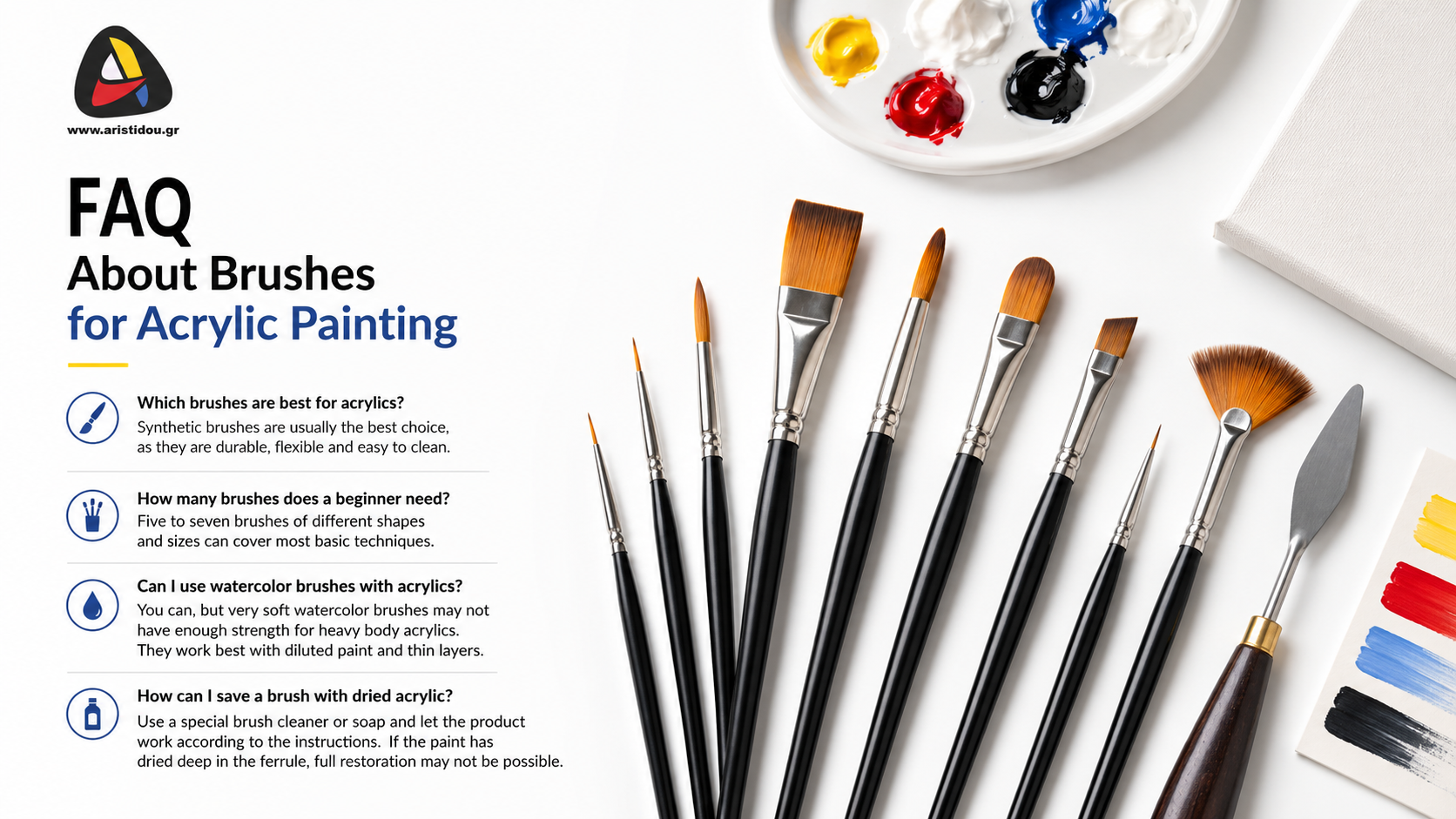 Frequently Asked Questions
What are the best brushes for acrylic paint?
Synthetic brushes are usually the best choice because they are durable, responsive and easy to clean.
How many brushes does a beginner need?
A collection of five to seven brushes in different shapes and sizes is sufficient for most basic acrylic painting techniques.
Can watercolour brushes be used with acrylic paint?
They can, but very soft watercolour brushes may not be firm enough for thick acrylic paint. They are better suited to diluted acrylics, glazing and fine washes.
How can you restore a brush with dried acrylic paint?
Apply a specialist brush cleaner or brush soap and follow the product instructions carefully. If the paint has dried deeply inside the ferrule, full restoration may not be possible.