Buying Guide: How to Choose the Right Art Markers for Different Surfaces
Art markers are no longer limited to paper, school projects or simple colouring. Today, they are widely used for illustration, sketching, lettering, mixed media, DIY crafts, custom decoration and a broad range of creative projects.
With so many types available, however, one question comes up again and again: which marker should you use for the surface you want to decorate?
A marker that performs beautifully on paper may not work properly on glass. A permanent marker is not necessarily the right choice for fabric, while an acrylic paint marker may behave differently depending on whether you are working on canvas, wood, stone or another surface.
Choosing the right marker starts with understanding the material you are working on.
In this buying guide, you will learn how to choose art markers based on the surface, technique and finish you want to achieve. You will also discover practical buying tips, common mistakes to avoid and the additional art supplies that can help you complete your project.
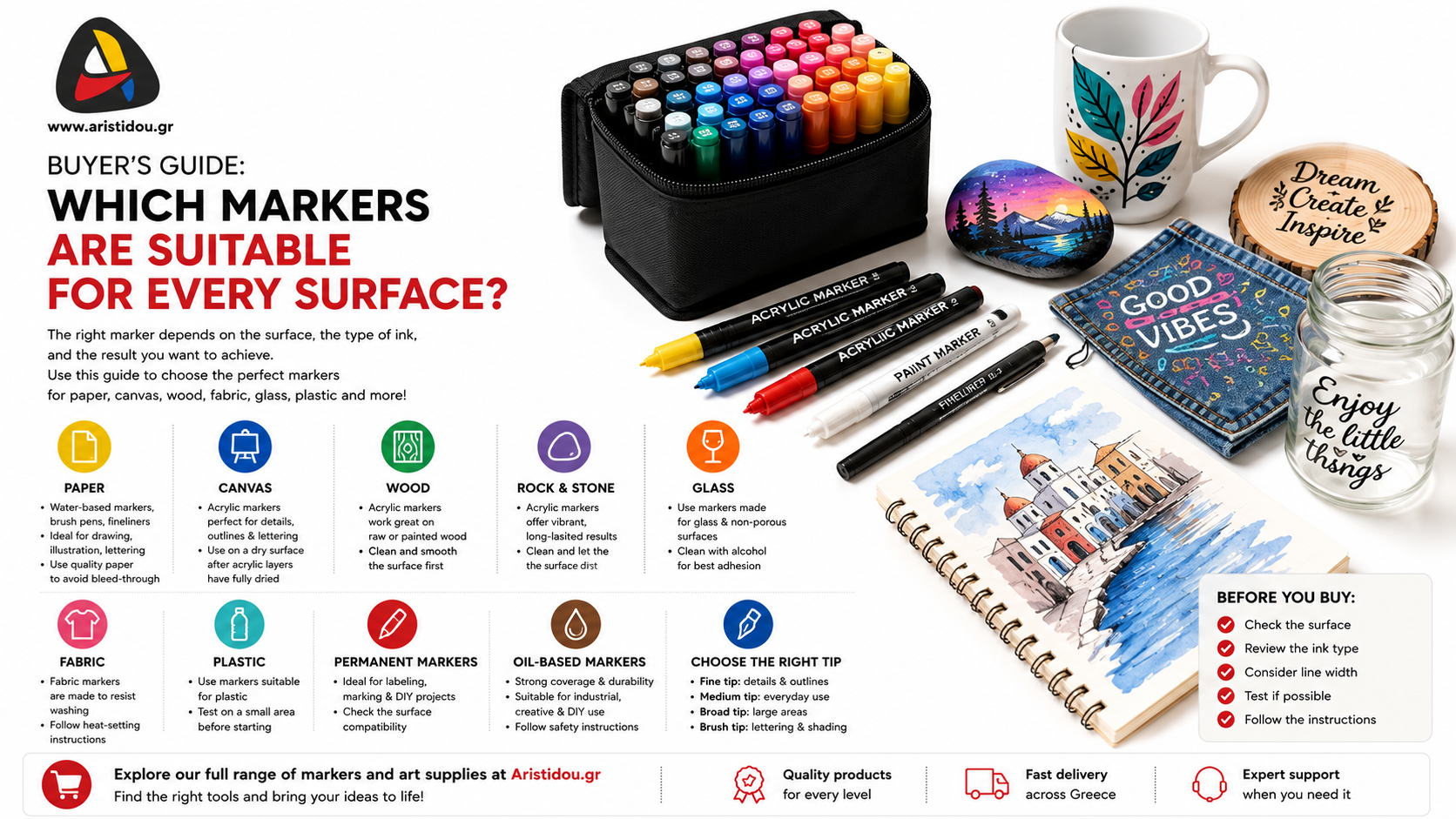 Why Does the Surface Matter When Choosing a Marker?
The surface directly affects how the colour flows, absorbs, adheres and dries.
Paper is porous and absorbent. Glass is smooth and non-porous. Wood may be raw, painted, sealed or varnished. Fabric is made from flexible fibres and may need to withstand washing.
Before choosing a marker, consider:
- the surface you plan to work on,
- the type of ink or paint,
- opacity and coverage,
- nib shape,
- line width,
- whether the result needs to be permanent,
- whether the finished item will be washed or handled regularly,
- whether additional protection may be required.
Expert tip: Never choose a marker based on colour or packaging alone. Always check the manufacturer's recommended surfaces and application instructions.
Best Markers for Paper and Drawing
Paper is the most common surface for art markers, but different types of paper can produce very different results.
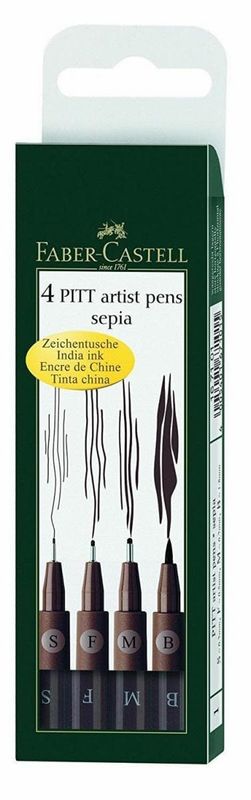
For drawing, illustration and creative projects, you may choose water-based markers, drawing pens, brush pens or other specialist art markers depending on your technique.
What should you look for?
Thin paper may wrinkle when exposed to a high volume of wet colour. Some marker formulations may also show through or bleed onto the reverse side.
If you plan to build multiple layers or use markers with a generous ink flow, choose a suitable drawing pad or sketchbook designed for your preferred medium.
For a more complete drawing setup, consider pairing your markers with:
- sketchbooks,
- drawing pads,
- graphite pencils,
- erasers,
- fineliners,
- rulers and drawing tools.
If you create a pencil sketch before adding colour, use light pressure. Heavy graphite lines may remain visible beneath pale or transparent colours.
Choosing Markers for Drawing and Illustration
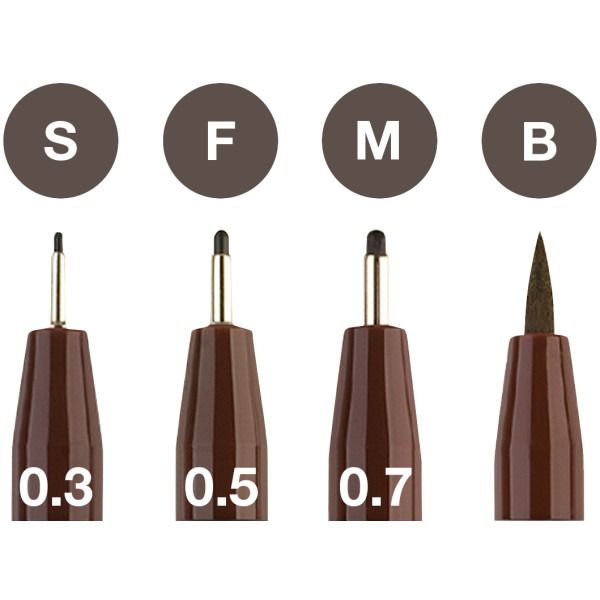
For detailed illustration, manga, comic art and technical sketching, nib size and control are particularly important.
Fine nibs are useful for:
- outlines,
- intricate details,
- line drawing,
- cross-hatching,
- architectural sketches,
- small illustrations.
Broader nibs are more practical when filling larger areas with colour.
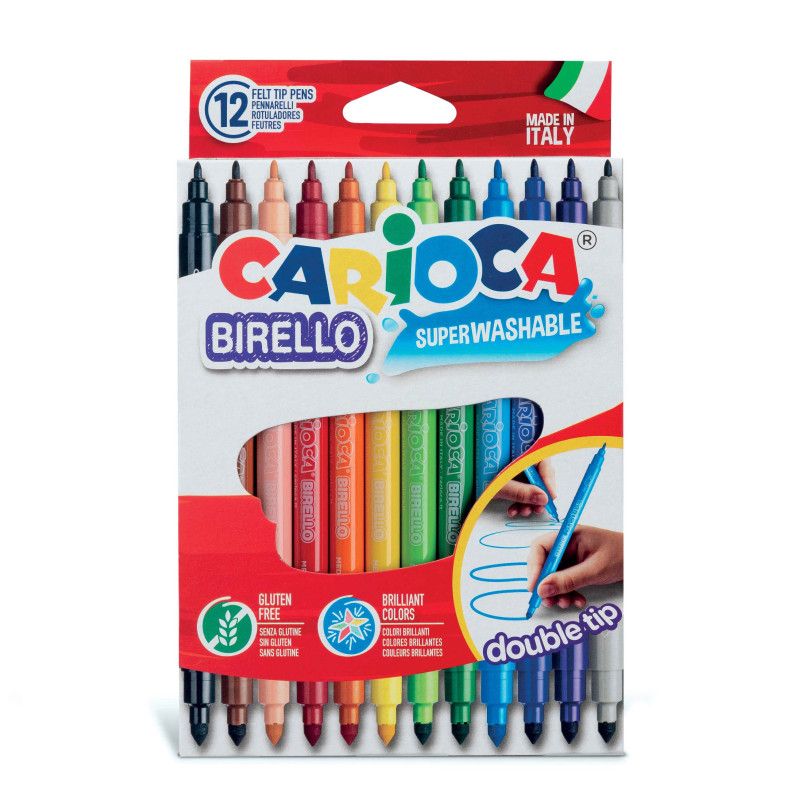
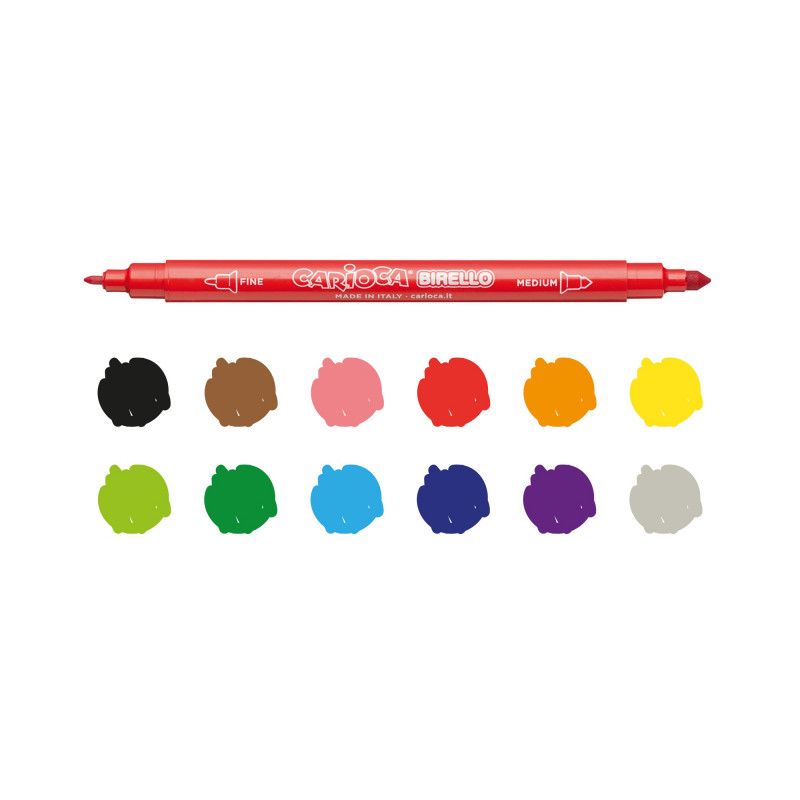
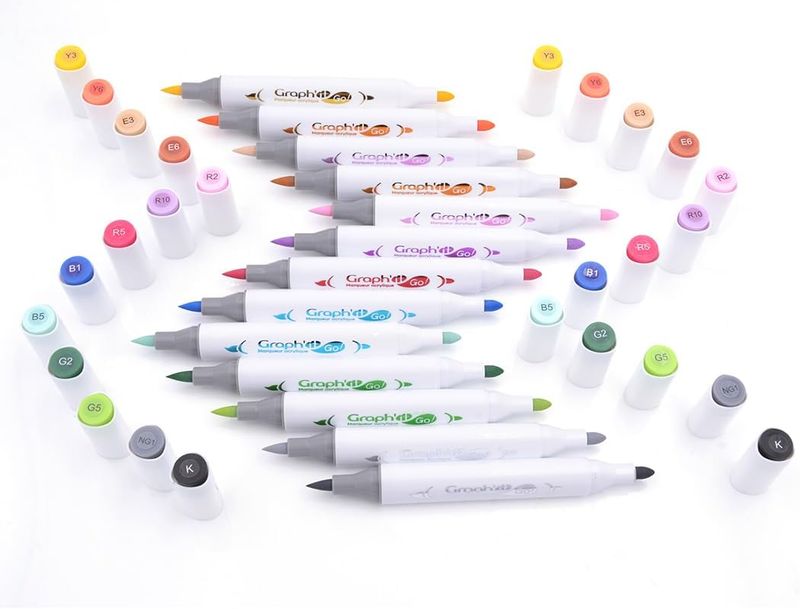
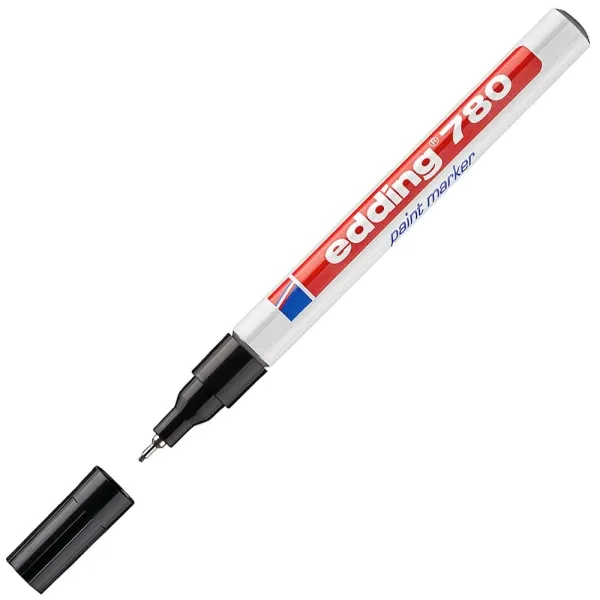
Dual-tip markers can be a convenient option when you want both precision and broader coverage without constantly changing tools.
Buying tip: If you are just getting started, you do not necessarily need dozens of similar nib sizes. Build a practical set with fine, medium and broader tips, then expand it according to your drawing style.
Acrylic Paint Markers: Which Surfaces Can You Use Them On?
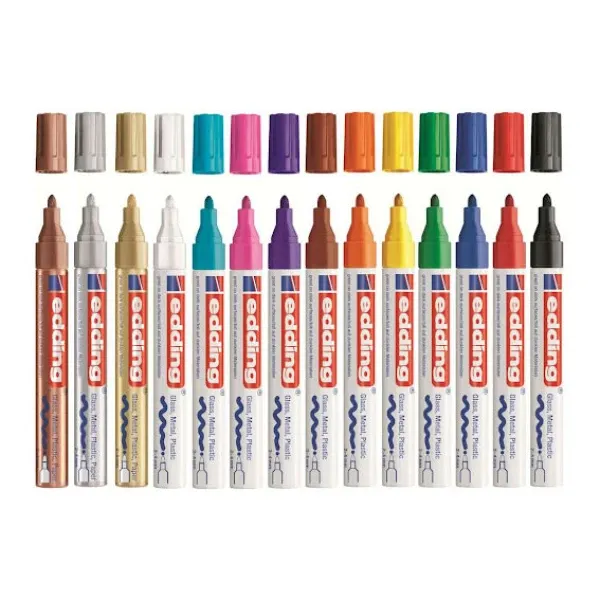
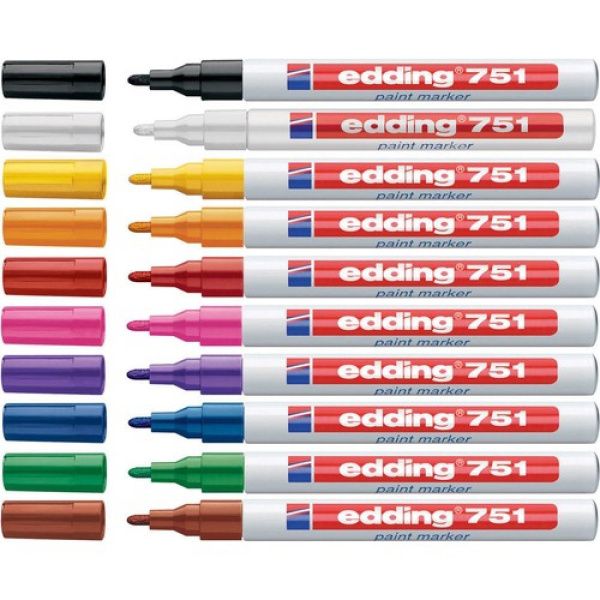
Acrylic paint markers have become increasingly popular for art and DIY projects because they offer the control of a marker with acrylic-based colour application.
Depending on the individual product and the manufacturer's instructions, acrylic markers may be suitable for a range of creative surfaces.
Common applications may include:
- paper,
- canvas,
- wood,
- stone,
- cardboard and craft surfaces.
Performance on smooth or non-porous materials can vary considerably between products. Always check whether the specific marker is recommended for your chosen surface.
Why choose acrylic paint markers?
Acrylic markers are particularly practical when you want:
- clean lines,
- greater application control,
- lettering,
- fine details on paintings,
- decorative patterns,
- colour application without a separate brush.
For a more versatile painting setup, consider combining acrylic paint markers with acrylic paints and brushes. Traditional acrylic paint is generally more practical for covering larger areas, while markers can be used to add controlled lines, patterns and finishing details.
Best Markers for Canvas
Markers can be used on canvas, provided you choose a product suitable for the application.
Acrylic paint markers are particularly useful for:
- fine lines,
- geometric designs,
- lettering,
- outlines,
- small corrections,
- mixed-media artwork,
- details over dry acrylic paint.
Before you begin, make sure the canvas surface is clean and dry.
If you are adding marker details over a painted canvas, allow the underlying paint layers to dry fully before continuing.
Expert tip: Very fine nibs may not move smoothly over a heavily textured canvas weave. A medium nib can provide a more consistent line, or you may choose to prepare the surface for a smoother finish.
For a complete canvas painting setup, consider combining your markers with stretched canvases, acrylic paints, gesso, brushes and painting knives.
Best Markers for Wood
Wood is a popular surface for DIY crafts, decorative projects and personalised designs.
However, marker performance can vary depending on whether the wood is raw, painted or sealed.
Using markers on raw wood
Raw wood is porous. It may absorb colour quickly, which can make lines appear less crisp.
Before decorating raw wood:
- Clean the surface.
- Remove dust and loose particles.
- Sand gently if necessary.
- Test the marker on a hidden or spare area.
Using markers on painted or prepared wood
A smoother, prepared surface may offer greater control and cleaner lines. The correct preparation will depend on the finish you want and the products you intend to use.
Acrylic paint markers can be a practical choice for wooden signs, decorative objects and lettering when the specific product is recommended for wood.
For DIY projects, you may also need acrylic paints, brushes, adhesives and craft tools. Combining different materials often provides more creative flexibility than relying on a single marker.
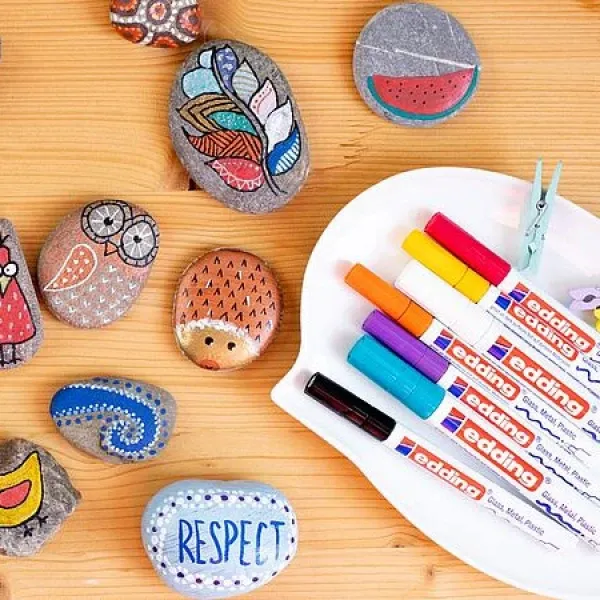
Best Markers for Stones and Rock Painting
Rock painting is an accessible creative activity for both adults and children.
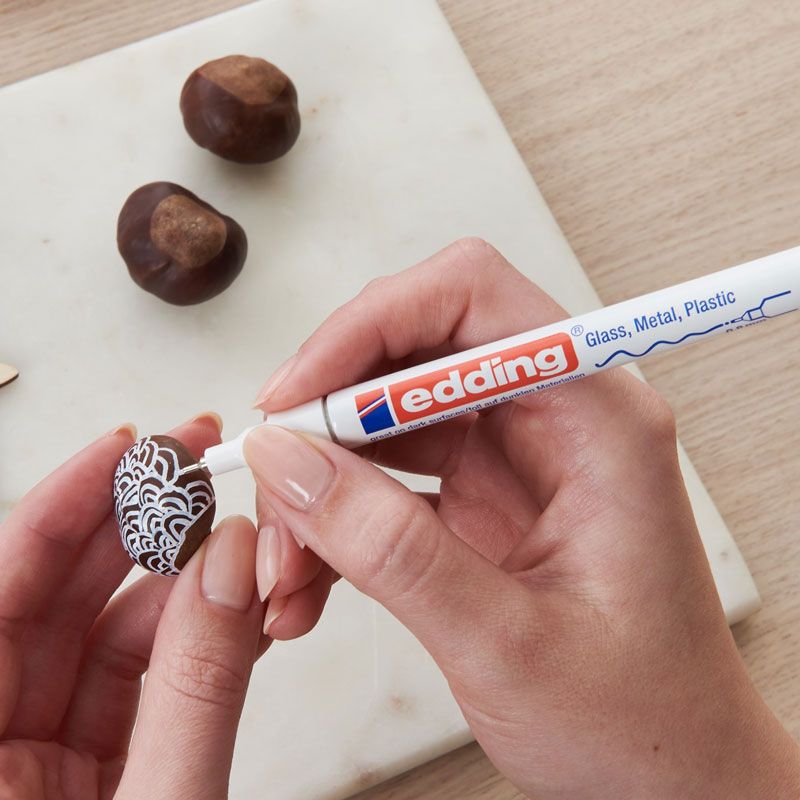
Acrylic paint markers can be particularly convenient for adding patterns, lettering and small decorative details.
Before painting a stone:
- wash it thoroughly,
- remove dirt and dust,
- allow it to dry completely,
- choose a relatively smooth surface whenever possible.
For larger areas of colour, you can apply acrylic paint with a brush first. Once the base layer is fully dry, add details with a suitable paint marker.
If the finished artwork will be displayed outdoors, check the instructions for all materials used and choose an appropriate protective finish where required.
Best Markers for Glass
Glass is a smooth, non-porous surface. Unlike paper, it does not absorb colour.
For glass projects, choose a marker specifically described as suitable for glass or non-porous surfaces.
Before applying colour:
- clean the glass thoroughly,
- remove grease and fingerprints,
- allow the surface to dry,
- avoid touching the prepared area.
Do not assume that every permanent marker or acrylic paint marker will create a permanent, washable finish on glass.
Wash resistance, curing requirements and care instructions vary between products.
Important: For glasses, plates and other items associated with food or drink, always follow the manufacturer's safety instructions. Do not apply colour to food-contact surfaces unless the product is specifically approved for that purpose.
Best Markers for Fabric
For T-shirts, tote bags, pencil cases and textile crafts, choose markers specifically designed for fabric.
Standard markers may fade, bleed or change after washing because they are not necessarily formulated to bond with textile fibres.
Before starting your project:
- pre-wash the fabric if recommended,
- avoid fabric softener that may leave residues,
- place protective cardboard between fabric layers,
- test the colour on a small area,
- follow the manufacturer's fixing or heat-setting instructions.
Placing cardboard inside a T-shirt or tote bag helps keep the fabric stable and reduces the risk of colour transferring to the reverse side.
Best Markers for Plastic
Plastic can be a challenging surface because there are many different types of plastic and surface finishes.
A marker may adhere well to one rigid plastic but perform poorly on a very smooth or flexible material.
Before decorating plastic:
- check whether the marker is recommended for plastic,
- clean the surface thoroughly,
- test the marker first,
- allow the colour to dry according to the instructions,
- check whether additional protection is required.
For objects that are handled regularly, consider the amount of friction and wear the design will experience.
Permanent Markers: When Are They the Right Choice?
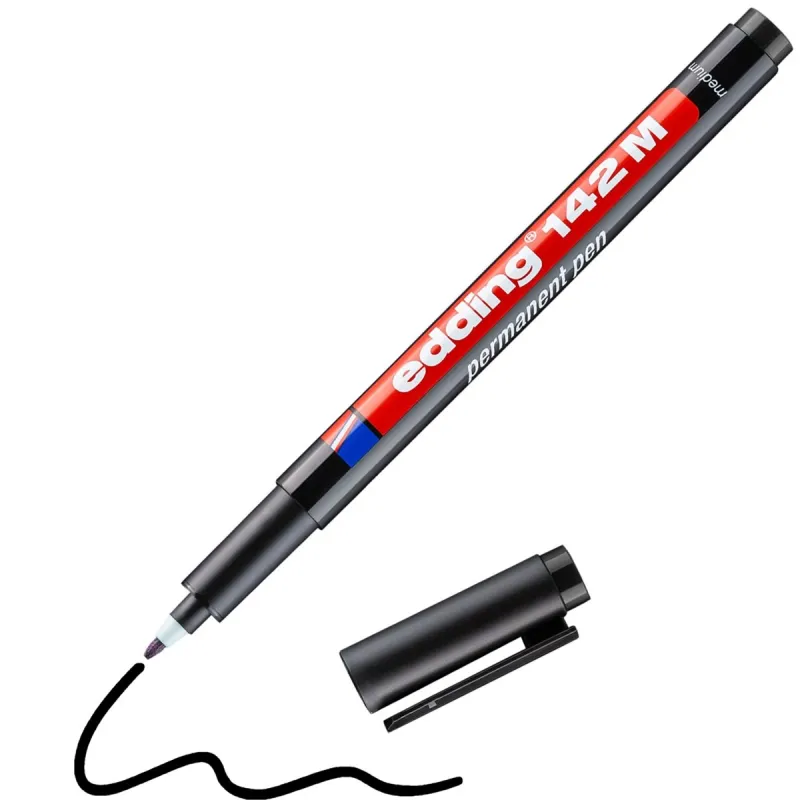
Permanent markers are useful for writing, labelling and applications that require greater durability than standard everyday markers.
Depending on their specifications, they may be suitable for a variety of materials.
Common uses include:
- labels,
- organisation,
- marking,
- office tasks,
- DIY projects,
- creative details.
However, the word "permanent" does not mean that a marker is suitable for every possible surface or condition.
Sunlight, water, cleaning products and repeated friction can all affect the finished result.
Always check the recommended application before use.
Oil-Based Paint Markers: What Are They Used For?
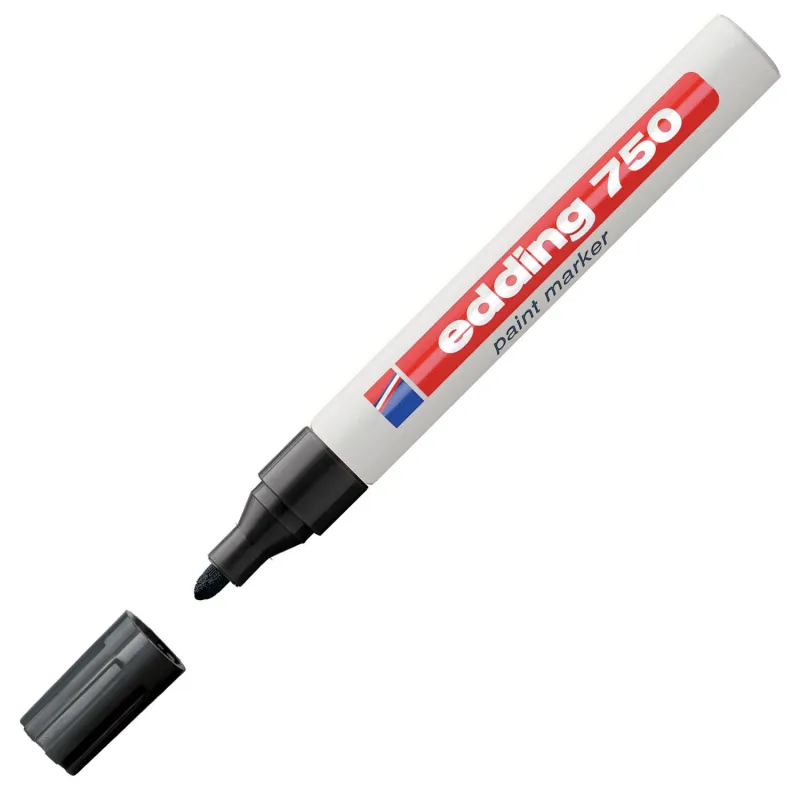
Oil-based paint markers are often chosen for applications that require strong coverage and use on specific surfaces, depending on the individual product specifications.
They may be useful for creative, decorative or professional applications.
Before buying, consider:
- the surface,
- nib width,
- drying time,
- required durability,
- application instructions.
Do not confuse oil-based paint markers with standard water-based art markers. They are different product categories and should be selected according to the intended project.
How to Choose the Right Marker Nib Size
Nib size has a significant impact on the final result.
Fine tip
Best suited to:
- details,
- outlines,
- small lettering,
- drawing,
- illustration.
Medium tip
Useful for:
- general art projects,
- lettering,
- decorative patterns,
- small and medium-sized areas.
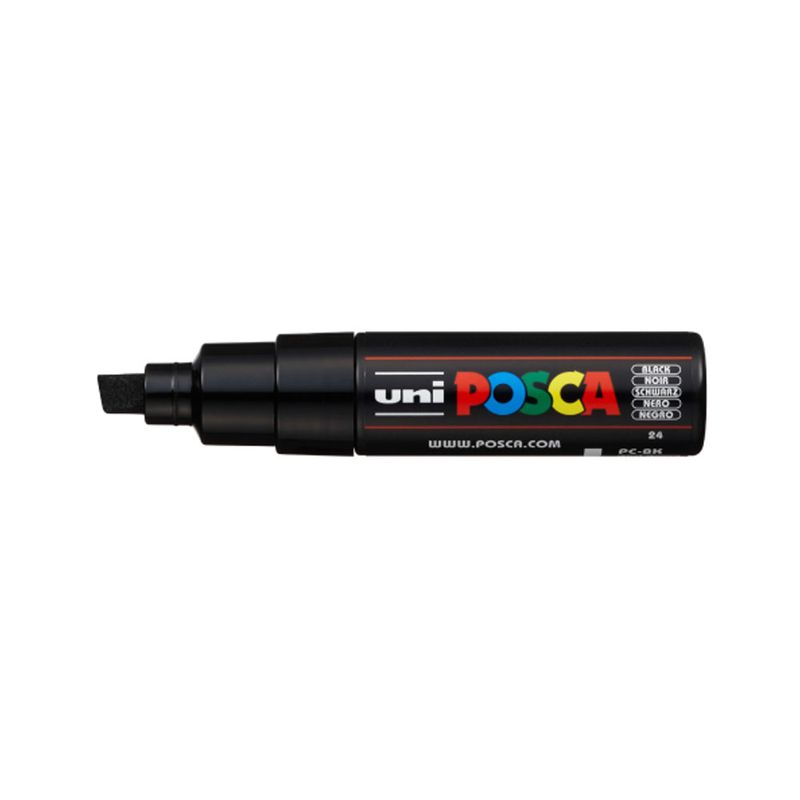
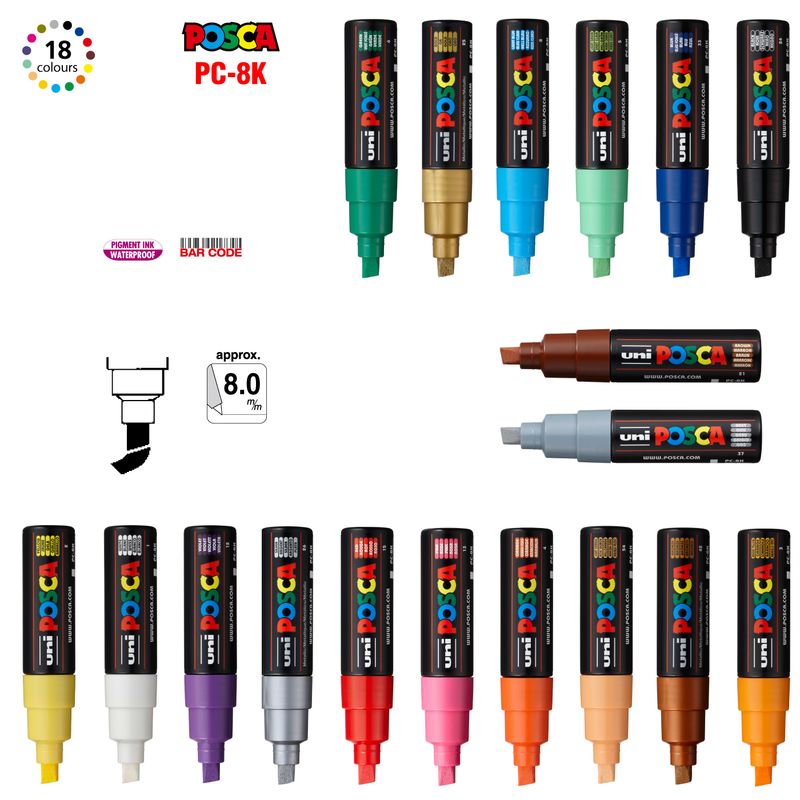
Broad tip
Suitable for:
- larger areas,
- posters,
- bold lettering,
- faster colour coverage.
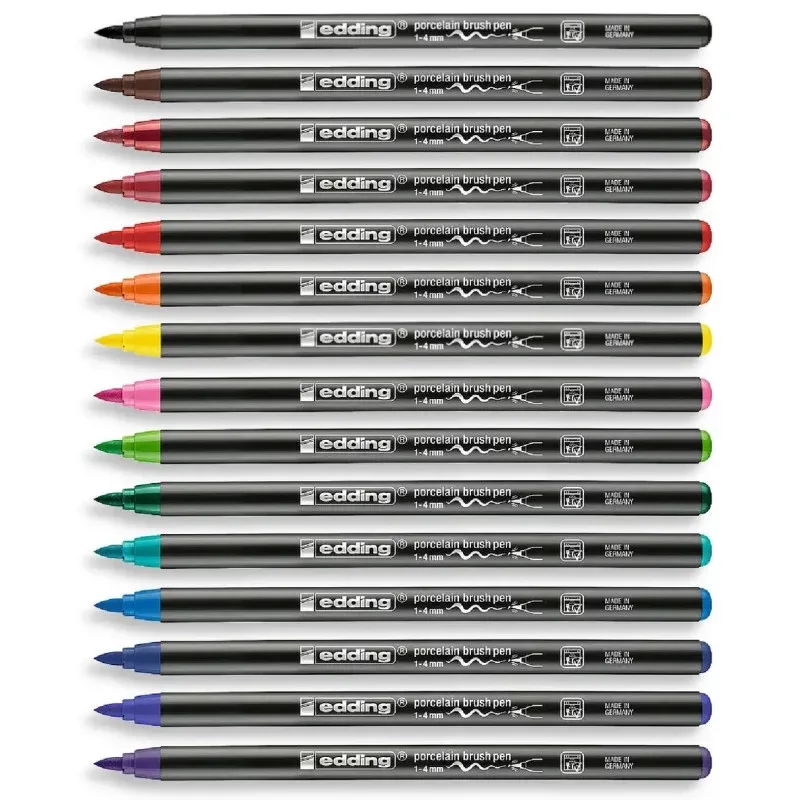
Brush tip
A flexible brush nib is ideal for:
- brush lettering,
- calligraphy,
- expressive lines,
- illustration,
- varying line width through pressure.
Expert tip: For a versatile creative toolkit, combine several nib sizes rather than buying a large number of colours with exactly the same tip.
Water-Based vs Permanent Markers: Which Should You Choose?
There is no single marker type that is best for every creative project.
Water-based markers are often practical for paper, drawing and creative activities where their particular colour behaviour suits the technique.
Permanent markers are more commonly chosen for marking, writing and applications that require greater durability than a standard marker.
Instead of asking, "Which marker is best?", ask:
"What surface am I working on, and what result do I want to achieve?"
That question will usually lead you to a much more suitable product.
Common Mistakes When Choosing Art Markers
1. Choosing markers based on colour alone
An attractive colour is not enough. Start with the surface and intended application.
2. Using standard markers on fabric
If the item will be washed, choose a marker specifically designed for textiles.
3. Skipping the test area
Materials can react differently to colour. Always test the marker on a spare or hidden area when possible.
4. Working on a dirty or greasy surface
Dust, oil and residue can affect colour application and adhesion.
5. Applying another layer too quickly
Allow the colour to dry according to the product instructions before adding further layers.
6. Choosing the wrong nib size
A fine nib makes filling a large area unnecessarily slow. A broad nib can make detailed work difficult.
7. Assuming "permanent" means suitable for everything
There is no universal marker for every surface and application. Always check the product specifications.
Which Marker Set Is Best for Beginners?
If you are new to art markers, you do not need to buy every type at once.
Start with the technique you actually want to explore.
For sketching and illustration, consider drawing markers, fineliners and a suitable sketchbook.
For DIY and decorative projects, acrylic paint markers can be a practical starting point for surfaces recommended by the manufacturer.
For lettering, look for brush pens or flexible nibs that allow you to vary line width.
For school and general creative activities, choose markers appropriate for the intended age group and type of use.
At Aristidou.gr, you can explore art markers, acrylic paint markers, drawing markers, permanent markers and different nib styles. Start with your surface and technique, then build a marker collection around the tools you will genuinely use.
What Else Do You Need with Art Markers?
Choosing the right surface is just as important as choosing the marker itself.
Depending on your project, you may also need:
- sketchbooks and drawing pads,
- painting canvases,
- acrylic paints,
- paintbrushes,
- drawing pencils,
- erasers,
- rulers,
- palettes,
- adhesives for mixed media and DIY projects,
- suitable varnishes or protective finishes where required.
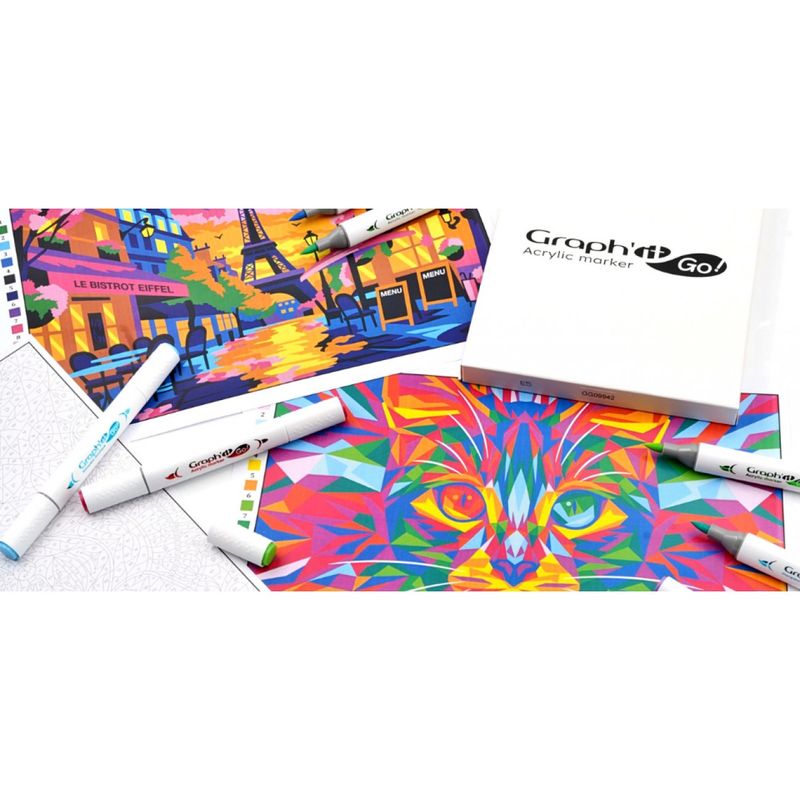
For example, in a mixed-media artwork you can build the main composition with acrylic paints and brushes, then add controlled details with acrylic paint markers.
In a sketchbook, you might begin with a light pencil drawing, refine the lines with a fineliner and complete the artwork with colour.
Effective cross-selling is not about buying more unrelated supplies. It is about choosing tools and materials that work together and genuinely support your technique.
Conclusion: Which Art Marker Is Right for You?
The right marker depends first on the surface and then on the technique you want to use.
For paper and sketching, consider drawing markers, fineliners and creative markers suitable for your chosen paper.
For canvas, wood and DIY projects, acrylic paint markers can be a practical option when the product specifications include your intended surface.
For textiles, choose dedicated fabric markers. For glass and other non-porous surfaces, use markers specifically recommended for those materials.
Before buying, check the surface compatibility, nib type, opacity and product instructions.
Explore the available marker collection and find the right tools for your technique and next creative project.
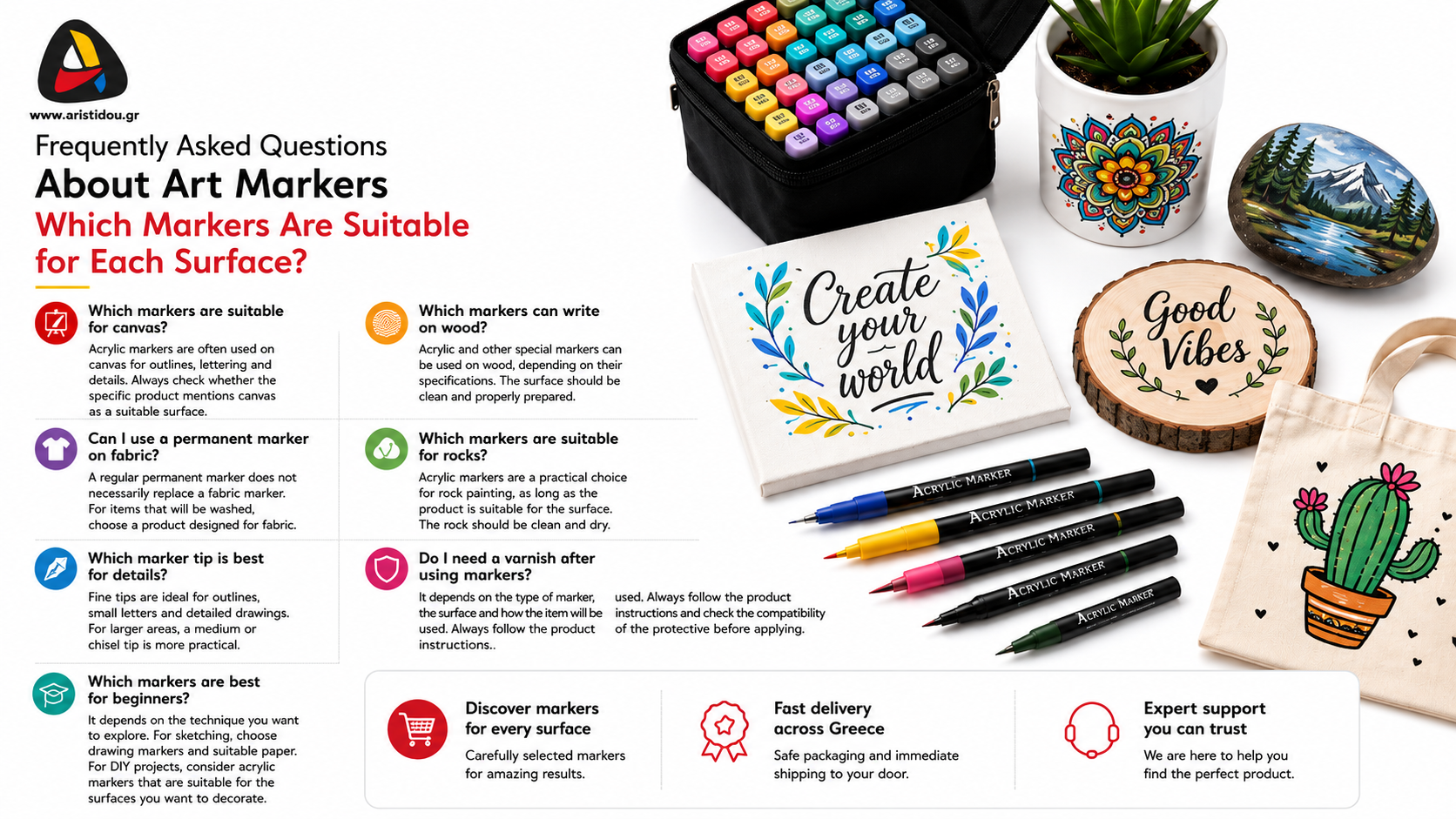 Frequently Asked Questions About Art Markers
Which markers are best for canvas?
Acrylic paint markers are commonly used on canvas for lines, lettering and detailed work. Always check whether the specific marker is recommended for canvas.
Which markers can be used on wood?
Acrylic paint markers and other specialist markers may be suitable for wood, depending on the product specifications. The surface should be clean and appropriately prepared.
Can I use a permanent marker on fabric?
A standard permanent marker is not necessarily a substitute for a fabric marker. For items that will be washed, choose a product specifically designed for textiles.
Which markers are best for rock painting?
Acrylic paint markers are a practical option for rock painting when the product is suitable for the surface. Clean and dry the stone before applying colour.
What marker nib is best for fine details?
Fine tips are suitable for outlines, small lettering and detailed illustration. Medium or broad tips are more practical for larger areas.
Do I need to varnish paint marker artwork?
It depends on the marker, surface and intended use of the finished item. Check the product instructions and confirm that any protective finish is compatible before applying it.
What are the best markers for beginners?
The best choice depends on the technique. For sketching, start with drawing markers and suitable paper. For DIY projects, consider acrylic paint markers designed for the surfaces you want to decorate.