How to Choose a Painting Canvas: A Complete Buying Guide
Choosing the right painting canvas is about more than finding a surface in the correct size. The canvas affects how the brush moves, how much texture remains visible, how the paint sits on the surface and how stable the finished artwork feels.
Before buying a canvas, consider your painting medium, the fabric and weave, the surface preparation, the depth of the stretcher bars and the way you plan to display the finished piece.
This guide explains the main differences between painting canvases and helps you select a suitable option for acrylics, oils, mixed media, practice work and finished artwork.
 What should you look for when buying a canvas?
A canvas should be selected according to the requirements of the artwork, rather than price alone. The main points to consider are:
- the type of paint you intend to use,
- the canvas material,
- the texture and weave,
- whether the surface has been primed,
- the depth and construction of the stretcher frame,
- the overall size and orientation,
- whether the finished work will be framed.
A small ready-stretched canvas is convenient for studies and practice. Larger work, heavy impasto and more demanding techniques require closer attention to both the fabric and the stretcher construction.
Cotton canvas or linen canvas?
Cotton canvas
Cotton is one of the most practical and widely used canvas materials. It is suitable for beginners, students, hobby painters and a broad range of professional applications.
Its main advantages include:
- good value for money,
- a flexible and responsive surface,
- a wide choice of sizes,
- suitability for acrylic and oil paint,
- convenient everyday use.
For a first painting, a ready-primed cotton canvas is usually the most straightforward choice.
Linen canvas
Linen is often selected for work that requires a finer weave, precise brush control or a more refined surface. It normally costs more than cotton and is commonly chosen by experienced or professional painters.
However, linen is not essential for every project. A well-prepared cotton canvas is suitable for most acrylic paintings, studies, art classes and everyday studio work.
Which canvas should you use for each painting medium?
Canvas for acrylic painting
Acrylic paint performs well on a primed canvas. It can be applied in thin washes, opaque layers, textured strokes, glazing techniques, mixed-media compositions and palette-knife work.
For a more complete acrylic painting setup, combine your canvas with:
- synthetic or natural-bristle acrylic brushes,
- a mixing palette,
- painting knives,
- acrylic mediums,
- gesso when additional preparation is required,
- a compatible finishing varnish.
Canvas for oil painting
Oil paint requires a properly prepared ground. The oil within the paint should not come into direct contact with untreated fabric fibres, so always choose a canvas described as primed and suitable for oils.
Because oil paint dries slowly, it is ideal for blending, gradual transitions and layered work. The canvas should remain stable, particularly when thicker paint applications are planned.
Watercolour and gouache
A standard painting canvas is not the first choice for watercolour because it does not absorb water in the same way as watercolour paper. It can only be used successfully when prepared with a specialist absorbent ground.
For watercolour and gouache, a suitable painting pad is normally more convenient. It provides more predictable absorption and helps prevent the paint from slipping or pooling unexpectedly on the surface.
Fine grain or visible texture?
The weave of a canvas influences both brush movement and the final appearance of the paint.
Fine-grain canvas
A finer surface is useful for:
- portrait painting,
- realistic details,
- precise lines,
- smooth colour transitions,
- smaller artworks.
Medium or coarse-grain canvas
A more visible weave works well for:
- landscapes,
- abstract painting,
- expressive brushwork,
- impasto,
- palette-knife techniques,
- compositions where texture is part of the visual effect.
Expert tip: The smoothest surface is not automatically the best one. A moderate weave can add energy to acrylic brushwork and preserve the handmade character of the painting.
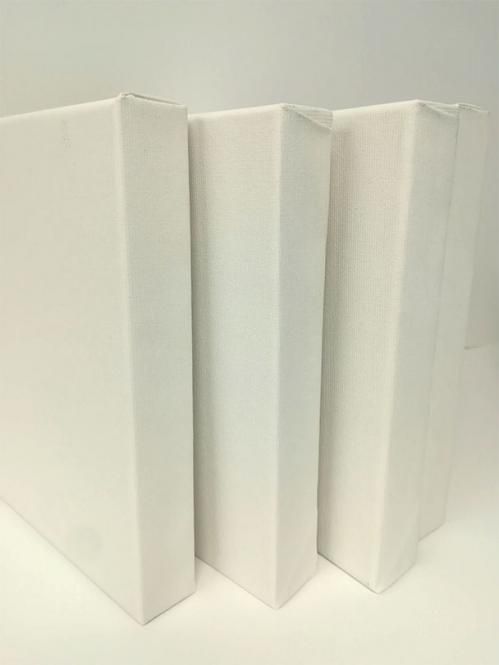
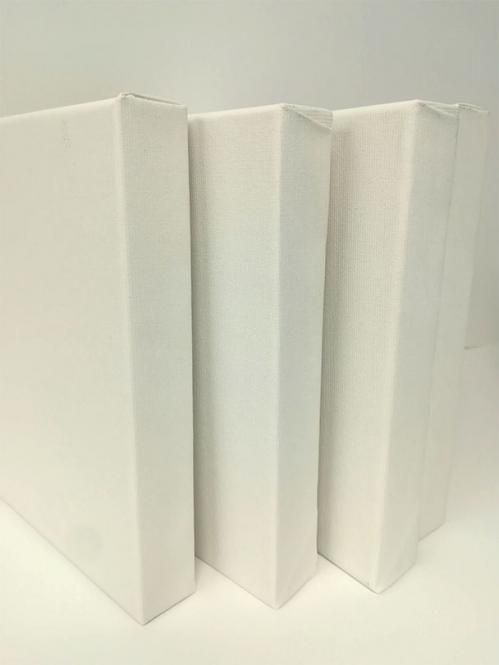
Should you choose a 2 cm or 3 cm canvas frame?
The depth of the stretcher frame influences the appearance, presentation and, to some extent, the structural feel of the artwork.
2 cm canvas frame
A slim-profile frame is practical for:
- small and medium-sized paintings,
- studies and exercises,
- artwork that will be placed in an outer frame,
- lower-cost creative projects,
- series containing several canvases.
It is a versatile option for students, beginners and painters who produce work regularly.
3 cm canvas frame
A deeper profile creates a stronger presence on the wall and can often be displayed without an additional frame.
It works particularly well for:
- larger compositions,
- artwork intended to hang unframed,
- modern and abstract painting,
- images that continue around the edges,
- pieces that require greater visual depth.
Frame depth alone does not guarantee structural stability. The stretcher construction, timber quality, canvas tension and overall dimensions are equally important.
 How do you choose the right canvas size?
The dimensions should suit the subject, your workspace and your level of experience.
Useful starting sizes include:
- 20 × 30 cm for small exercises,
- 30 × 40 cm for portraits and simple compositions,
- 40 × 50 cm for landscapes and more developed work,
- 50 × 70 cm or larger for expressive painting and broader brushwork.
A large canvas requires more paint, larger brushes and enough working distance to view the composition. A very small canvas, on the other hand, may feel restrictive when a beginner tries to include too much detail.
Before choosing a size, consider:
- whether you will work at a table or easel,
- how much studio space is available,
- whether the canvas is easy to transport,
- where the finished piece will be displayed,
- whether the composition should be portrait, landscape or square.
White canvas or black canvas?
A white canvas is the most versatile option. It allows colours to appear clean and bright and is suitable for almost any subject.
A black canvas or dark ground can be particularly effective for:
- night scenes,
- high-contrast compositions,
- metallic or luminous colours,
- abstract artwork,
- paintings in which dark negative spaces remain visible.
Some transparent colours may need additional layers over a dark ground. Alternatively, a light underpainting can be added beneath areas that need greater brightness.
Does a ready-made canvas need extra gesso?
Many ready-stretched canvases are already primed and can be painted on immediately. Check the product description before adding another ground.
Extra coats of gesso can be useful when you want:
- a smoother surface,
- a less visible weave,
- different absorbency,
- a white or tinted ground,
- greater control over paint application.
Allow each coat to dry fully. For a smoother finish, the dry surface can be sanded very gently between coats with an appropriate fine abrasive paper.
Ready-stretched canvas, canvas roll or painting pad?
Ready-stretched canvas
This is the most convenient option for immediate use. It does not require stretching or assembly and is suitable for most painters.
Canvas by the roll
Canvas rolls are useful for:
- custom dimensions,
- very large paintings,
- building handmade stretcher frames,
- controlling each stage of the surface preparation,
- producing a series of work to consistent specifications.
Stretching canvas requires care and experience. Uneven tension can create loose areas, distortion or an unstable painting surface.
Acrylic and oil painting pads
A suitable pad is useful for practice, colour tests, compositional studies and painting outside the studio. It does not always replace a stretched canvas, but it is portable, economical and convenient for experimentation.
Common mistakes when buying a painting canvas
- Choosing only according to the lowest price.
- Starting with a canvas that is too large.
- Using watercolour on standard canvas without an absorbent ground.
- Applying additional gesso before the previous coat has dried.
- Using very small brushes across a large surface.
- Storing canvases in damp or unstable conditions.
- Placing heavy objects against the painted surface.
- Assuming that every canvas is prepared for every painting medium.
What do you need for a complete canvas painting setup?
A practical starter setup may include:
- one or two ready-stretched cotton canvases,
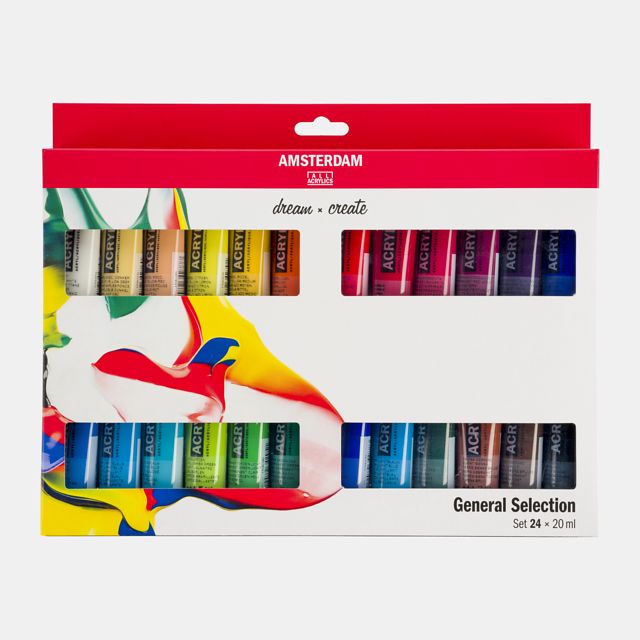
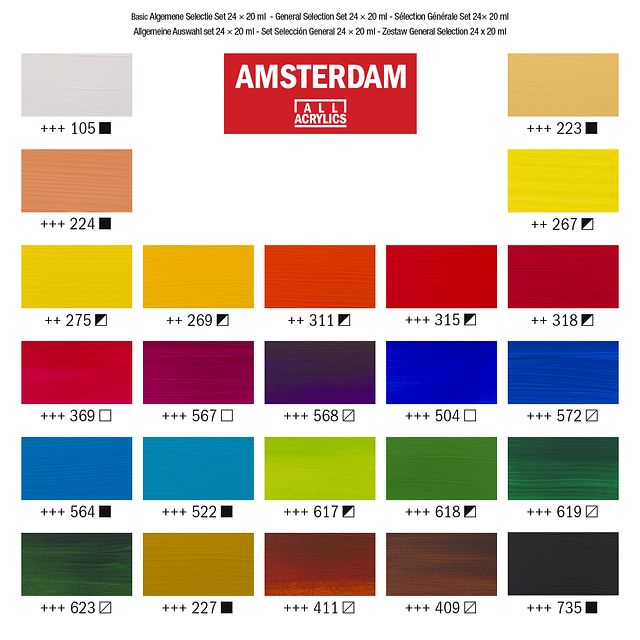
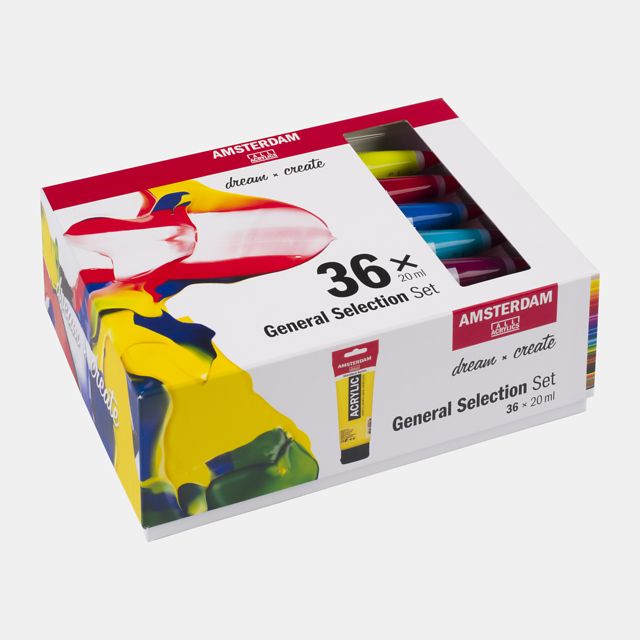
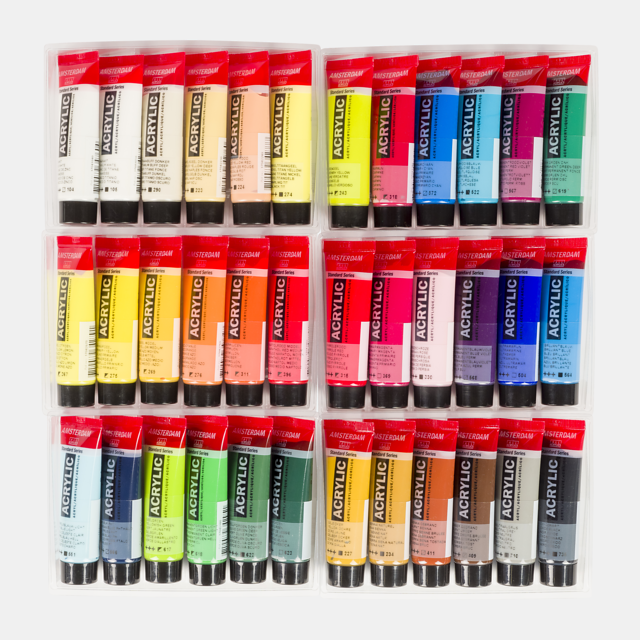
- a basic acrylic or oil paint set,
- flat and round brushes,
- a mixing palette,
- a water container for acrylics,
- a cloth or absorbent paper,
- a painting knife for mixing and texture,
- an easel when the canvas size or workspace requires one.
At Aristidou.gr, you can explore painting canvases in a range of sizes alongside acrylic paints, brushes, painting knives, easels and other art materials. Start with a canvas that matches your medium and working style, then add only the tools you genuinely need.
 Frequently asked questions about painting canvases
What is the best painting canvas for a beginner?
A ready-primed cotton canvas with a medium weave is usually the most practical choice for a beginner.
What canvas size should I use for my first painting?
A 30 × 40 cm or 40 × 50 cm canvas provides enough room to work comfortably without requiring a large amount of paint.
Can acrylic paint be applied directly to canvas?
Yes, provided that the canvas is primed and described as suitable for acrylic paint. Additional gesso is optional.
What is the difference between a 2 cm and a 3 cm canvas frame?
A 2 cm frame has a slimmer profile and works well for smaller or externally framed artwork. A 3 cm frame creates more depth and is suitable for paintings displayed without an outer frame.
Do I need to apply gesso to a pre-primed canvas?
Not necessarily. Apply additional gesso only when you want to change the texture, absorbency, smoothness or colour of the ground.
How should blank and painted canvases be stored?
Store them upright in a clean, dry area away from direct sunlight, radiators, moisture and objects that could press against or puncture the surface.